Hi, everyone! I thought this week was a good time to post an update I
planned to entitle Update September 2016. That changed when my most
exciting news arrived in my inbox this morning. I can't exactly call
this Dark Fiction, but it's more that side of my writing than anything
else, though the tone of the story is fast and light. My short story The Wishing Bazaar is now part of the third series of Lethbridge-Stewart 'The
Brigadier' of Doctor Who fame. I've been keeping this secret for quite
some unbearable time. With the press release it's official:
***
My next truly Dark Fiction title Blood Moon will appear in Night to Dawn magazine
early next year. It is one of
several from an on-going project of shorts under a theme, of which I've
already published some stories. I have it in mind to place a few with
magazines and then form a collection either through a publisher, should I
be able to find one, or dip into self-publishing.
***
I've other news for writing that has nothing to do with Dark Fiction so I'll refrain from posting here, except to say, others are screaming for work from
me, I know. I'm sorry. Life pitches us curves and no one can be more
frustrated than I.
I have a schedule I'm diving into. Thanks to everyone who has asked for work and those who have shown incredible patience.
Writer of Dark Fiction
Monday, September 19, 2016

Monday, September 12, 2016
Plot vs Pants
First, an explanation.
A writer who is a ‘plotter’ plans out the course of the story, spends time thinking about the plot, theme, subtext, characterisation, and many other elements ‘before writing’.
A ‘pantser’ sits down at the keyboard with an idea or a model (these are two different things I won’t explain here except to say one is more fully-fledged than the other) and begins to write. ‘Pantsing’ is to ‘fly by the seat of’ (one’s pants), though I prefer to call it organic writing.
I’m (mostly) a pantser, which I’ve come to realise doesn’t mean I don’t plot but having read a reference to Stephen King recently, a proverbial lightbulb went off in my head illuminating the fact that, like King, I’m an intuitive plotter. I am NOT for the record stating at this point in time I do it as well as he does, but here’s hoping one day, preferably soon. Really, that’s the definition of (successful) pantsers -- they are intuitive plotters.
Yes, I am able to face the blank page and craft a story with nothing more than a vague idea in mind. I tend to write from beginning to end. I seldom jump around. The story comes to me as if I am reading, and in that respect it appears I’m lucky the way King is fortuitous. We are able to ‘pants’ it. The same cannot be said of every writer, though it doesn’t diminish the effort required, and a simple but painful truth remains: sometimes planning isn’t a bad idea even for pantsers. A story may not work for many reasons. Vital elements may be missing. Or be in the wrong order. Even a good book may benefit from being looked over to check all the important formations of story-telling are present and/or in the right place.
I imagine most writers start out as pantsers, unless they have some form of professional writing background. The majority of writers are readers who range from someone ‘wanting to have a go’ to those who have always dreamed of it being a vocation. Some (the lucky few) will discover they are intuitive, their writing tends to be organic, and they write something good enough to capture a publisher’s interest. Those who aren’t intuitive likely never publish anything, or nothing well-received.
Stories have patterns. Don’t worry if you didn’t realise this. If you’re a reader, you shouldn’t. I was ‘just’ a reader once, though there’s no such thing as ‘just a reader’ to those who love books, who buy them or produce them. A reader should enjoy a book without seeing its framework. The reader isn’t supposed to know the design is there.
Pantsers start writing and either give up or get nowhere (I throw my hands up and confess there are always the often-dreaded exceptions) because they don’t realise this, or they are intuitive and form the shape without realising. Once pantsers become published authors, they may or may not perceive the hidden construction of stories. Some will continue to be intuitive without thinking about it, while some (of which I am one) will begin to spot these layouts.
A note of warning: IMHO recognition of these designs ‘may’ spoil the simple enjoyment of reading somewhat (at least for me). As an author I now read a book more aware of the narrative. I’m able to spot the ‘inciting incident’ (for example). Don’t worry if as a reader you don’t know what that is, but writers should understand. For me, books were more enjoyable when these plot points were ‘invisible’ because as a reader my mind wasn’t tuned in to spot them.
Plotters know stories require an arrangement and they set out to make the task easier for themselves by laying the groundwork beforehand.
To a pantser plotting feels like studying for an exam. A plotter to a pantser can seem like one of those irritating kids in school who enjoyed the study process. Ironically, I was one of those who didn’t overly mind studying -- good thing because as a writer there are times when I need to do research.
The trouble is, depending on what level of intuitive grasp the writer has of the subject, the pantser can be the one looking wistfully back, wishing they had spent the hours pouring over the text books in order to obtain a better result, but I’m not advocating either option.
Which is better? This is a simple question with an easy answer: use the one that works for you. Some writers plot, some pants, and some do a mixture of the two, and what’s required can differ from work to work, genre to genre, project to project. The choice often comes down to which the writer finds easier, more natural, or even which he or she can withstand. For some pantsers, plotting can seem torturous. For some plotters, pantsing must seem bewildering and disastrous.
A writer who is a ‘plotter’ plans out the course of the story, spends time thinking about the plot, theme, subtext, characterisation, and many other elements ‘before writing’.
A ‘pantser’ sits down at the keyboard with an idea or a model (these are two different things I won’t explain here except to say one is more fully-fledged than the other) and begins to write. ‘Pantsing’ is to ‘fly by the seat of’ (one’s pants), though I prefer to call it organic writing.
I’m (mostly) a pantser, which I’ve come to realise doesn’t mean I don’t plot but having read a reference to Stephen King recently, a proverbial lightbulb went off in my head illuminating the fact that, like King, I’m an intuitive plotter. I am NOT for the record stating at this point in time I do it as well as he does, but here’s hoping one day, preferably soon. Really, that’s the definition of (successful) pantsers -- they are intuitive plotters.
Yes, I am able to face the blank page and craft a story with nothing more than a vague idea in mind. I tend to write from beginning to end. I seldom jump around. The story comes to me as if I am reading, and in that respect it appears I’m lucky the way King is fortuitous. We are able to ‘pants’ it. The same cannot be said of every writer, though it doesn’t diminish the effort required, and a simple but painful truth remains: sometimes planning isn’t a bad idea even for pantsers. A story may not work for many reasons. Vital elements may be missing. Or be in the wrong order. Even a good book may benefit from being looked over to check all the important formations of story-telling are present and/or in the right place.
I imagine most writers start out as pantsers, unless they have some form of professional writing background. The majority of writers are readers who range from someone ‘wanting to have a go’ to those who have always dreamed of it being a vocation. Some (the lucky few) will discover they are intuitive, their writing tends to be organic, and they write something good enough to capture a publisher’s interest. Those who aren’t intuitive likely never publish anything, or nothing well-received.
Stories have patterns. Don’t worry if you didn’t realise this. If you’re a reader, you shouldn’t. I was ‘just’ a reader once, though there’s no such thing as ‘just a reader’ to those who love books, who buy them or produce them. A reader should enjoy a book without seeing its framework. The reader isn’t supposed to know the design is there.
Pantsers start writing and either give up or get nowhere (I throw my hands up and confess there are always the often-dreaded exceptions) because they don’t realise this, or they are intuitive and form the shape without realising. Once pantsers become published authors, they may or may not perceive the hidden construction of stories. Some will continue to be intuitive without thinking about it, while some (of which I am one) will begin to spot these layouts.
A note of warning: IMHO recognition of these designs ‘may’ spoil the simple enjoyment of reading somewhat (at least for me). As an author I now read a book more aware of the narrative. I’m able to spot the ‘inciting incident’ (for example). Don’t worry if as a reader you don’t know what that is, but writers should understand. For me, books were more enjoyable when these plot points were ‘invisible’ because as a reader my mind wasn’t tuned in to spot them.
Plotters know stories require an arrangement and they set out to make the task easier for themselves by laying the groundwork beforehand.
To a pantser plotting feels like studying for an exam. A plotter to a pantser can seem like one of those irritating kids in school who enjoyed the study process. Ironically, I was one of those who didn’t overly mind studying -- good thing because as a writer there are times when I need to do research.
The trouble is, depending on what level of intuitive grasp the writer has of the subject, the pantser can be the one looking wistfully back, wishing they had spent the hours pouring over the text books in order to obtain a better result, but I’m not advocating either option.
Which is better? This is a simple question with an easy answer: use the one that works for you. Some writers plot, some pants, and some do a mixture of the two, and what’s required can differ from work to work, genre to genre, project to project. The choice often comes down to which the writer finds easier, more natural, or even which he or she can withstand. For some pantsers, plotting can seem torturous. For some plotters, pantsing must seem bewildering and disastrous.
Wednesday, September 07, 2016
Ten Memorable Titles
I was tagged some time ago on Facebook. The way the game works is to
list ten that have stayed with you in some way. They don’t have to be
the ‘right’ books, and you shouldn’t think about it too long — just ten
that have touched you and stayed with you. Then you nominate ten more
people to play the game.
My problem was sticking to ten, and sticking to the ‘stayed with you in some way’, which isn’t necessarily the same thing as favourite books and authors.
Here, I’m including the list but with a variation on the theme adding explanations. Slight cheat — the first is two by one author, and there are a couple of trilogies.
In no particular order:
The Happy Prince/Picture of Dorian Gray by Oscar Wilde
The Happy Prince — read as a child, and I cried my eyes out. Well, not literally and that would be gross, but yes, I sobbed. Hey, I was like nine or younger, and the first time I heard the story someone else read it to me. It would probably still make my lips tremble. It has everything: morality, romance, heart-wrenching pain. A Picture of Dorian Gray is just one of those stories that’s never forgotten. As is often the case, my first awareness of this tale was the old black and white film. I didn’t get to read the book until my teens, but it’s an undeniable classic.
Gormenghast (trilogy/first two books) by Mervyn Peake
Not only a story that has touched and stayed with me, it’s one of my favourites, if not ‘the’ favourite owing to the scope of imagination, the names given to the characters, but most of all the richness of the language used, something sadly lacking in most books today.
Neverwhere by Neil Gaiman
I adore this ‘other world’ below London in this urban fantasy. For Doctor Who fans, it may be of interest to know that Peter Capaldi played The Angel Islington in the 1996 television series, but it is the novelisation that stayed with me. Again, I love the names given to the characters, and the idea of an ordinary man dragged into an extraordinary world, one right under London as well.
Wraeththu (trilogy) by Storm Constantine
This is possibly the author’s most well-known and outstanding work. A futuristic fantasy of post-apocalyptic proportions told through the eyes of three characters (one per book). The story follows Wreaththu — hermaphrodite beings who are skillful with forms of magic — and their interaction with humans. At times romantic, but questioning perceptions of sexuality and mankind’s humanity/inhumanity to each other, there’s more going on here to those with an open mind.
Snowflake by Paul Gallico
A child’s book that I’ve never seen anywhere since. I last tried searching for it about five years ago, but it wasn’t available, and I think I only found one listing for it. (Update: there are a few copies around and it can be listened to on youtube.) I have no need of an actual replacement, although mine is so old and well-read it’s now lacking a cover and is just a very thin volume of aged yellowing pages. In short, Snowflake is born, goes on many adventures, falling in love with Raindrop and then at the dramatic conclusion returns to the sky. It had everything for a child — adventure, romance, and even self-sacrifice. I loved (and kept) so many of my childhood books, but this is my favourite.
Tom Sawyer by Mark Twain
My first ‘adventure’ for an older reader, and I’ve chosen it because it’s linked to the one good clear memory I have of my mother. She read it to me long before I was able to read it myself. She must have read it, at my request, about three times before I was able to take over. I still have the little burgundy covered book that she gave me. Owing to her ill health, I don’t have many memories like that so her reading Tom Sawyer is priceless.
Knowledge of Angels by Jill Paton Walsh
Only read once, but I loved this book and remember it well. Some might see it as an argument against religion, but I think more than that it illustrates what man is capable of doing to each other, using religion as an excuse. I especially like the story behind the book, that it was turned down by everyone, so Jill Paton Walsh self-published at a time when it was much harder to do than now. It went on to win a Booker prize — before they changed the rules to disallow self-published titles.
The Incredible Shrinking Man by Richard Matheson
It was a close call between this and I Am Legend, but this just pips it for me. My first memory of the story was once again the old black and white movie. Who can forget the battle with the giant spider? Some love spiders, some hate; some have this strange love/hate affinity with them. I think their webs are beautiful and amazing. I think the spider is incredible. I just don’t want to come across one unexpectedly. In short, my early recollections were of that chill down one’s spine at the thought of battling a giant spider. I hadn’t read the book until recently, and likely had a preconceived notion of what to expect. The book, though in many ways accurate to the film, differs vastly in that it’s more emotional. I didn’t expect to experience so many emotions including such sadness interwoven with sympathy for the main character, in what many assume is a horror story.
Nocturnes by John Connolly
I like John Connolly’s work. I’m often perplexed with how he seems to break so many ‘rules’, particularly with his Charlie Parker novels — including both first and third person viewpoints, and even telling the story in an omnipresent way when relating something that happened in the past. Not all writers can even manage point of view changes successfully, but it seems to suit his style, his ‘voice’. I chose to include Nocturnes because I was surprised to come across a collection of short stories with gothic influences. They are both olde-worlde and new.
I Capture the Castle by Dodie Smith
Best known for writing One Hundred and One Dalmatians, and the sequel The Starlight Barking. Yes, 101 had a sequel, and I have both books. I Capture the Castle has one of the best opening sentences. As John Steinbeck’s end to Of Mice and Men is startling, the most memorable thing about Dodie Smith’s first novel for adults has always been the line that begins, “I write this sitting in the kitchen sink.”
My problem was sticking to ten, and sticking to the ‘stayed with you in some way’, which isn’t necessarily the same thing as favourite books and authors.
Here, I’m including the list but with a variation on the theme adding explanations. Slight cheat — the first is two by one author, and there are a couple of trilogies.
In no particular order:
The Happy Prince/Picture of Dorian Gray by Oscar Wilde
The Happy Prince — read as a child, and I cried my eyes out. Well, not literally and that would be gross, but yes, I sobbed. Hey, I was like nine or younger, and the first time I heard the story someone else read it to me. It would probably still make my lips tremble. It has everything: morality, romance, heart-wrenching pain. A Picture of Dorian Gray is just one of those stories that’s never forgotten. As is often the case, my first awareness of this tale was the old black and white film. I didn’t get to read the book until my teens, but it’s an undeniable classic.
Gormenghast (trilogy/first two books) by Mervyn Peake
Not only a story that has touched and stayed with me, it’s one of my favourites, if not ‘the’ favourite owing to the scope of imagination, the names given to the characters, but most of all the richness of the language used, something sadly lacking in most books today.
Neverwhere by Neil Gaiman
I adore this ‘other world’ below London in this urban fantasy. For Doctor Who fans, it may be of interest to know that Peter Capaldi played The Angel Islington in the 1996 television series, but it is the novelisation that stayed with me. Again, I love the names given to the characters, and the idea of an ordinary man dragged into an extraordinary world, one right under London as well.
Wraeththu (trilogy) by Storm Constantine
This is possibly the author’s most well-known and outstanding work. A futuristic fantasy of post-apocalyptic proportions told through the eyes of three characters (one per book). The story follows Wreaththu — hermaphrodite beings who are skillful with forms of magic — and their interaction with humans. At times romantic, but questioning perceptions of sexuality and mankind’s humanity/inhumanity to each other, there’s more going on here to those with an open mind.
Snowflake by Paul Gallico
A child’s book that I’ve never seen anywhere since. I last tried searching for it about five years ago, but it wasn’t available, and I think I only found one listing for it. (Update: there are a few copies around and it can be listened to on youtube.) I have no need of an actual replacement, although mine is so old and well-read it’s now lacking a cover and is just a very thin volume of aged yellowing pages. In short, Snowflake is born, goes on many adventures, falling in love with Raindrop and then at the dramatic conclusion returns to the sky. It had everything for a child — adventure, romance, and even self-sacrifice. I loved (and kept) so many of my childhood books, but this is my favourite.
Tom Sawyer by Mark Twain
My first ‘adventure’ for an older reader, and I’ve chosen it because it’s linked to the one good clear memory I have of my mother. She read it to me long before I was able to read it myself. She must have read it, at my request, about three times before I was able to take over. I still have the little burgundy covered book that she gave me. Owing to her ill health, I don’t have many memories like that so her reading Tom Sawyer is priceless.
Knowledge of Angels by Jill Paton Walsh
Only read once, but I loved this book and remember it well. Some might see it as an argument against religion, but I think more than that it illustrates what man is capable of doing to each other, using religion as an excuse. I especially like the story behind the book, that it was turned down by everyone, so Jill Paton Walsh self-published at a time when it was much harder to do than now. It went on to win a Booker prize — before they changed the rules to disallow self-published titles.
The Incredible Shrinking Man by Richard Matheson
It was a close call between this and I Am Legend, but this just pips it for me. My first memory of the story was once again the old black and white movie. Who can forget the battle with the giant spider? Some love spiders, some hate; some have this strange love/hate affinity with them. I think their webs are beautiful and amazing. I think the spider is incredible. I just don’t want to come across one unexpectedly. In short, my early recollections were of that chill down one’s spine at the thought of battling a giant spider. I hadn’t read the book until recently, and likely had a preconceived notion of what to expect. The book, though in many ways accurate to the film, differs vastly in that it’s more emotional. I didn’t expect to experience so many emotions including such sadness interwoven with sympathy for the main character, in what many assume is a horror story.
Nocturnes by John Connolly
I like John Connolly’s work. I’m often perplexed with how he seems to break so many ‘rules’, particularly with his Charlie Parker novels — including both first and third person viewpoints, and even telling the story in an omnipresent way when relating something that happened in the past. Not all writers can even manage point of view changes successfully, but it seems to suit his style, his ‘voice’. I chose to include Nocturnes because I was surprised to come across a collection of short stories with gothic influences. They are both olde-worlde and new.
I Capture the Castle by Dodie Smith
Best known for writing One Hundred and One Dalmatians, and the sequel The Starlight Barking. Yes, 101 had a sequel, and I have both books. I Capture the Castle has one of the best opening sentences. As John Steinbeck’s end to Of Mice and Men is startling, the most memorable thing about Dodie Smith’s first novel for adults has always been the line that begins, “I write this sitting in the kitchen sink.”
Monday, August 22, 2016
Real Publishing, Real Books
An ebook is a book in what may be, for some, an unfamiliar format.
This necessitates the reader to get used to different methods of reading
and storing books, but the end product is still that of a story. The
writer has other differences to consider between electronic and print
markets.
First, there are seldom advances. Some publishers have introduced a small advance but generally, this is not the case and don't expect the type of up-front payment as the 'big six' might offer if they feel a book has the potential to be a bestseller. To be fair, many mid-stream print publishers aren't so free with initial payouts. When offered, these prepayments aren't always as large as they once were and based on a number of books a publisher 'expects' to sell. I've heard of huge advances withdrawn if an acceptable manuscript isn't delivered and, in some instances, if books simply don't retail well and meet expectation. Advice is, don't spend an advance -- bank it for a good while.
Print books are often also released electronically now whereas predominately electronic books aren't going to make the shelf in a local bookstore, not unless they eventually go to print, or the shop has the facilities to offer electronic books as part of its 'stock'. Maybe not even then. Many printed books never make it to local shops, either, and require ordering, but let's not forget technology is advancing. Predictions are one day a book 'shop' may consist of a catalogue and a screen from which to order, the books appearing 'magically' as some sort of electronic download or almost instant POD (Print on Demand. While this sounds like science-fiction such scientific applications are being considered and in development.
The good news for the writer is royalties on ebooks are higher and here's where the ebook author has a difficult choice. Print books are wonderful and many writers will say they long for their titles to be in print. They may read ebooks themselves and love them, but the writer wants to hold their work as something 'solid'. Touch makes something feel more actual. It may be why many mistakenly conclude the electronic markets aren't real publishing, while others love being able to cart a library around on a small device that fits into a pocket. In context, there are those who say emails aren't real letters but the technology still transfers information effectively. However, the writer also needs to consider he or she can earn approximately 25, 35 or 50% in royalties from an ebook. From a print book, royalty payments can be as low as 7%. Let that sink in for a minute before I add a writer can earn more in royalties from an ebook but these titles may not have such a wide distribution, so the potential to sell fewer copies, though this has improved through distributor networks more recently. As more mainstream titles appeared in electronic formats so more companies became distributors just as they would with print, and even printed works can have the same problem with limited markets and outlets.
Now we move to why ebooks cost so much. After all, they skip the printing stage. Yes, they do, but this is another matter for those who scorn ebooks to consider. Printing is the ONLY element that the ebook skips. This is a rough guide only based on experience but consider the levels a story goes through before release.
When submitted to a publisher the submission goes to a reader. A reader may be an editor at the publishing house or a reader only, but either way, from a synopsis and first three chapters, a reader will decide whether to ask for the entire manuscript. If the reader likes the draft, they'll pass it on, discuss it with others in the publishing house including management, and a team will decide whether to offer a contract. This is especially true if the writer is an unknown name to them. An editor is assigned and the work goes through the editing process. Some publishers allow a writer to work with a single editor for all work submitted. Sometimes, publishers simply hand the next book scheduled for editing to an available editor. I much prefer building up a relationship with an editor, to learn how we both work, and where we can trust each other. This can make for less friction and time wasted. Depending on how much attention the work needs, it may go through one, two, three, or more edit rounds before the line-editing department provides a fresh 'set of eyes' to look the story over. This time, the book is specifically checked for punctuation errors, house-style etc., and even obvious story problems. When one or two line editors are finished, the work is returned to the main editor who will look at the changes before sending them on to the writer. The writer and editor collaborate and, once happy, send the work to the proofing department. A final effort is made to spot any errors before the book is formatted* and ready for release. The writer may or may not get to proof the final galley. (*Some formatting is often left to the author, but I'll not go into that this time.)
While this sounds like a leisurely process, it isn't. I've grown used to "Can we have this yesterday?" It's often a fraught time. Think of all the effort that goes into this editing procedure. As much as I love my books when I've gone through all the revisions I do prior to submitting and all these edits, and considering that I try to re-read at every opportunity, by the time the book is published I'm feeling a little sick of it. Also, keep in mind most writers work part-time if not full-time as well as write. Many editors do likewise. In some instances, so do the publishers. Many companies, with the exception of extremely large publishing houses, are run as secondary businesses. Management, editors, line editors, proofers, and the authors all give of their so-called 'spare' time -- a phrase that quickly becomes an in-house joke. When considering the number of man-hours, it makes the financial rewards paltry.
There's also the cost of cover art. Early on the writer may be required to submit a cover art request to provide an idea of the book's subject. Providing the artist with enough details takes considerably more thought than many expect. Some publishing houses ask the writer to 'okay' the cover, some don't. I've heard of some authors being extremely upset by their book covers. I'm sure there are good and bad examples in all markets but, so far, my comments have almost always been taken into consideration. Covers can range from quite cheap to expensive.
Wait. We're not finished. Who writes the blurb? That's the short teaser on the back cover of a printed book to get the reader interested in buying. Often, that's the job of the author, too. A publisher may change the blurb completely or simply tweak it, but the author has to provide an original and full blurb. The writer also has to submit a new story with a synopsis and usually needs to maintain a website. The author needs to promote, though if with a good publisher the company will do at least of a portion of promoting, too. Some now request a whole marketing strategy along with a manuscript. I'd be wary if the publisher asks for this without any indication of what they will do in return, but it is a part of modern-day publishing. A writer's best ability is to be accomplished at marketing.
Promotion shouldn't be left entirely to the author but any 'wannabe' needs to know they are expected to play their part. For the writer who envisages the romantic image of sitting at a desk tapping happily away, one work after the other, nothing could be further from the truth.
This still looks as if I've not answered why ebooks can cost as much to produce as print. One reason is the difference in those royalties, but we're not talking millions made by the writer or publisher. Not these days. What this means in terms of actual money, I'll cover another time, but in brief, an ebook goes through the same or similar process as most printed books. Only the final stage -- the format it's produced in -- differs, and this can take 'more effort' because there are many types of files available now. Glitches can happen. Returns for errors create more work and cost.
As for whether to read ebooks...as much as choosing what book to read is about choice, so should choosing the format in which one wishes to read be an act of free-will. I'd be devastated to see print books disappear, but I like to own a collection of both if for no other reason than much-needed space. Something else to consider is that I made my decision to write for an e-publisher based on what I could see happening to the book market in general. Although erotic publishers were at the forefront and the mainstay of the e-publishing market for a long time, books face strong competition. Many people struggle to find the time to read. The way ALL books are produced is changing, with even large mainstream publishers turning to POD technology and electronic formats. I own the works of Poe both in print and ebook. When considering publishing I decided not to turn my back on what might happen to the future of books. I could see many who sneer being taken by surprise. The author who turns their back on the idea of change could risk being left behind, and may miss out on some wonderful opportunities.
First, there are seldom advances. Some publishers have introduced a small advance but generally, this is not the case and don't expect the type of up-front payment as the 'big six' might offer if they feel a book has the potential to be a bestseller. To be fair, many mid-stream print publishers aren't so free with initial payouts. When offered, these prepayments aren't always as large as they once were and based on a number of books a publisher 'expects' to sell. I've heard of huge advances withdrawn if an acceptable manuscript isn't delivered and, in some instances, if books simply don't retail well and meet expectation. Advice is, don't spend an advance -- bank it for a good while.
Print books are often also released electronically now whereas predominately electronic books aren't going to make the shelf in a local bookstore, not unless they eventually go to print, or the shop has the facilities to offer electronic books as part of its 'stock'. Maybe not even then. Many printed books never make it to local shops, either, and require ordering, but let's not forget technology is advancing. Predictions are one day a book 'shop' may consist of a catalogue and a screen from which to order, the books appearing 'magically' as some sort of electronic download or almost instant POD (Print on Demand. While this sounds like science-fiction such scientific applications are being considered and in development.
The good news for the writer is royalties on ebooks are higher and here's where the ebook author has a difficult choice. Print books are wonderful and many writers will say they long for their titles to be in print. They may read ebooks themselves and love them, but the writer wants to hold their work as something 'solid'. Touch makes something feel more actual. It may be why many mistakenly conclude the electronic markets aren't real publishing, while others love being able to cart a library around on a small device that fits into a pocket. In context, there are those who say emails aren't real letters but the technology still transfers information effectively. However, the writer also needs to consider he or she can earn approximately 25, 35 or 50% in royalties from an ebook. From a print book, royalty payments can be as low as 7%. Let that sink in for a minute before I add a writer can earn more in royalties from an ebook but these titles may not have such a wide distribution, so the potential to sell fewer copies, though this has improved through distributor networks more recently. As more mainstream titles appeared in electronic formats so more companies became distributors just as they would with print, and even printed works can have the same problem with limited markets and outlets.
Now we move to why ebooks cost so much. After all, they skip the printing stage. Yes, they do, but this is another matter for those who scorn ebooks to consider. Printing is the ONLY element that the ebook skips. This is a rough guide only based on experience but consider the levels a story goes through before release.
When submitted to a publisher the submission goes to a reader. A reader may be an editor at the publishing house or a reader only, but either way, from a synopsis and first three chapters, a reader will decide whether to ask for the entire manuscript. If the reader likes the draft, they'll pass it on, discuss it with others in the publishing house including management, and a team will decide whether to offer a contract. This is especially true if the writer is an unknown name to them. An editor is assigned and the work goes through the editing process. Some publishers allow a writer to work with a single editor for all work submitted. Sometimes, publishers simply hand the next book scheduled for editing to an available editor. I much prefer building up a relationship with an editor, to learn how we both work, and where we can trust each other. This can make for less friction and time wasted. Depending on how much attention the work needs, it may go through one, two, three, or more edit rounds before the line-editing department provides a fresh 'set of eyes' to look the story over. This time, the book is specifically checked for punctuation errors, house-style etc., and even obvious story problems. When one or two line editors are finished, the work is returned to the main editor who will look at the changes before sending them on to the writer. The writer and editor collaborate and, once happy, send the work to the proofing department. A final effort is made to spot any errors before the book is formatted* and ready for release. The writer may or may not get to proof the final galley. (*Some formatting is often left to the author, but I'll not go into that this time.)
While this sounds like a leisurely process, it isn't. I've grown used to "Can we have this yesterday?" It's often a fraught time. Think of all the effort that goes into this editing procedure. As much as I love my books when I've gone through all the revisions I do prior to submitting and all these edits, and considering that I try to re-read at every opportunity, by the time the book is published I'm feeling a little sick of it. Also, keep in mind most writers work part-time if not full-time as well as write. Many editors do likewise. In some instances, so do the publishers. Many companies, with the exception of extremely large publishing houses, are run as secondary businesses. Management, editors, line editors, proofers, and the authors all give of their so-called 'spare' time -- a phrase that quickly becomes an in-house joke. When considering the number of man-hours, it makes the financial rewards paltry.
There's also the cost of cover art. Early on the writer may be required to submit a cover art request to provide an idea of the book's subject. Providing the artist with enough details takes considerably more thought than many expect. Some publishing houses ask the writer to 'okay' the cover, some don't. I've heard of some authors being extremely upset by their book covers. I'm sure there are good and bad examples in all markets but, so far, my comments have almost always been taken into consideration. Covers can range from quite cheap to expensive.
Wait. We're not finished. Who writes the blurb? That's the short teaser on the back cover of a printed book to get the reader interested in buying. Often, that's the job of the author, too. A publisher may change the blurb completely or simply tweak it, but the author has to provide an original and full blurb. The writer also has to submit a new story with a synopsis and usually needs to maintain a website. The author needs to promote, though if with a good publisher the company will do at least of a portion of promoting, too. Some now request a whole marketing strategy along with a manuscript. I'd be wary if the publisher asks for this without any indication of what they will do in return, but it is a part of modern-day publishing. A writer's best ability is to be accomplished at marketing.
Promotion shouldn't be left entirely to the author but any 'wannabe' needs to know they are expected to play their part. For the writer who envisages the romantic image of sitting at a desk tapping happily away, one work after the other, nothing could be further from the truth.
This still looks as if I've not answered why ebooks can cost as much to produce as print. One reason is the difference in those royalties, but we're not talking millions made by the writer or publisher. Not these days. What this means in terms of actual money, I'll cover another time, but in brief, an ebook goes through the same or similar process as most printed books. Only the final stage -- the format it's produced in -- differs, and this can take 'more effort' because there are many types of files available now. Glitches can happen. Returns for errors create more work and cost.
As for whether to read ebooks...as much as choosing what book to read is about choice, so should choosing the format in which one wishes to read be an act of free-will. I'd be devastated to see print books disappear, but I like to own a collection of both if for no other reason than much-needed space. Something else to consider is that I made my decision to write for an e-publisher based on what I could see happening to the book market in general. Although erotic publishers were at the forefront and the mainstay of the e-publishing market for a long time, books face strong competition. Many people struggle to find the time to read. The way ALL books are produced is changing, with even large mainstream publishers turning to POD technology and electronic formats. I own the works of Poe both in print and ebook. When considering publishing I decided not to turn my back on what might happen to the future of books. I could see many who sneer being taken by surprise. The author who turns their back on the idea of change could risk being left behind, and may miss out on some wonderful opportunities.
Monday, August 15, 2016
A Blast from the Past
It's April 2007 and I'm watching Night at the Museum. Mickey Rooney is in the cast. I'm experiencing a blast from the past, but one of those synchronous moments, a weird coincidence. I've recently lost my father. The connection -- as tenuous as it can be between people and families at times -- has been severed. When grief is fresh, it's often difficult to invoke a good recollection and, depending on the relationship, sometimes those are scarce. Seeing the thespian conjures a welcome memory.
Many years ago, I booked tickets for Sugar Babies at the Savoy Theatre in London; the performance starred Mickey Rooney and Anne Miller. I don't know why but at the last instant, I instructed the agent to add an extra ticket. I didn't check with our friends whether they minded, or if my father were free. I took a spur of the moment chance. Our friends didn't mind, and I told him to make sure he was available. I did not tell him where he was going except to see a show.
Sugar Babies is a musical revue, a tribute to the era of burlesque. Some might have thought it strange that our age group wanted to attend, but many of us had grown up watching musicals airing on a Sunday afternoon. The production was as nostalgic for us as for someone of my father's generation.
A fabulous evening was had by all, though if you were to ask me now to note the songs sang, or the skits performed, I couldn't. I can remember the moment Mickey came onto the stage too soon then had to stand pretending to be invisible until he could step in on cue, much to the entertainment of the other actors and the crowd. That Anne still had those fabulous shapely legs, which I rightly knew my father would enjoy viewing for real and not just on the television. That the saying not to work with children or animals, applies, at least when TV and stage is concerned: namely, a sketch where a woman had to stand covered in birds; the enactment went well except for the 'little presents' left on the floor, which created more laughter in a scene that should, and otherwise did, look beautiful.
We all had a wonderful night, but my father enjoyed himself most. He laughed his proverbial socks off and watching him laugh added to our amusement. I spent the evening sitting by his side while he chuckled, grinned, clapped and whistled. He did these things to the point of embarrassing, was the last one to stop, the last person to leave his seat -- wonderful! Not only do I have this recollection, he took pleasure in a marvelous evening during a hard working, stressful and, at times, painful life. My impulsive decision gave him enjoyment. For a few hours, he was able to set everything else aside.
This reveals a routinely overlooked truth: entertainment serves more than one purpose. A good book, a film, a play, music... Such things are part of our lives to a greater extent than we realise. The books I read as a child, many of which I still own, are friends, much as the people who remain a constant presence, and are as priceless. Not only do these things entertain, sometimes providing us with a much-needed escape, the moments they create shape our future, present, and our past.
The format doesn't matter. What makes us laugh, gasp, cry, jump or stare in wonder -- all these are markers, our companions along the way, part of the journey from birth unto death, and they form the blasts from the past that help our loved ones recall those happy moments once we are gone.
I owe a thank you to the creators, organisers, and performers for a precious memory...and to the writers, without whom such shared experiences would never happen.
Many years ago, I booked tickets for Sugar Babies at the Savoy Theatre in London; the performance starred Mickey Rooney and Anne Miller. I don't know why but at the last instant, I instructed the agent to add an extra ticket. I didn't check with our friends whether they minded, or if my father were free. I took a spur of the moment chance. Our friends didn't mind, and I told him to make sure he was available. I did not tell him where he was going except to see a show.
Sugar Babies is a musical revue, a tribute to the era of burlesque. Some might have thought it strange that our age group wanted to attend, but many of us had grown up watching musicals airing on a Sunday afternoon. The production was as nostalgic for us as for someone of my father's generation.
A fabulous evening was had by all, though if you were to ask me now to note the songs sang, or the skits performed, I couldn't. I can remember the moment Mickey came onto the stage too soon then had to stand pretending to be invisible until he could step in on cue, much to the entertainment of the other actors and the crowd. That Anne still had those fabulous shapely legs, which I rightly knew my father would enjoy viewing for real and not just on the television. That the saying not to work with children or animals, applies, at least when TV and stage is concerned: namely, a sketch where a woman had to stand covered in birds; the enactment went well except for the 'little presents' left on the floor, which created more laughter in a scene that should, and otherwise did, look beautiful.
We all had a wonderful night, but my father enjoyed himself most. He laughed his proverbial socks off and watching him laugh added to our amusement. I spent the evening sitting by his side while he chuckled, grinned, clapped and whistled. He did these things to the point of embarrassing, was the last one to stop, the last person to leave his seat -- wonderful! Not only do I have this recollection, he took pleasure in a marvelous evening during a hard working, stressful and, at times, painful life. My impulsive decision gave him enjoyment. For a few hours, he was able to set everything else aside.
This reveals a routinely overlooked truth: entertainment serves more than one purpose. A good book, a film, a play, music... Such things are part of our lives to a greater extent than we realise. The books I read as a child, many of which I still own, are friends, much as the people who remain a constant presence, and are as priceless. Not only do these things entertain, sometimes providing us with a much-needed escape, the moments they create shape our future, present, and our past.
The format doesn't matter. What makes us laugh, gasp, cry, jump or stare in wonder -- all these are markers, our companions along the way, part of the journey from birth unto death, and they form the blasts from the past that help our loved ones recall those happy moments once we are gone.
I owe a thank you to the creators, organisers, and performers for a precious memory...and to the writers, without whom such shared experiences would never happen.
Monday, August 08, 2016
Lisbon and Obidos
Whenever there are claims that a place may be the most beautiful
capital city, I’m skeptical. I admit this is largely because I’m not
much of a city person. Whenever we visit a capital I tend to like to
pass through as quickly as possible, and often it’s amazing I visit any
at all. While Lisbon is still too much ‘city’ for me, it is a place I
won’t hesitate to return to if the opportunity allows.

We weren’t there for more than a few hours, and I was more taken with the tiled buildings, and the view of the river than anything else, so am unable to report what the city has to offer. I would recommend a trip on the water to fully appreciate the expanse of the bridges.

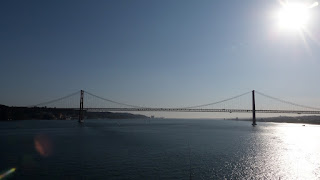
The most famous of these is the one modelled on San Francisco’s Golden Gate bridge. 230 above the water, it is possible to view the cars passing overheard and it’s a good opportunity to make use of a camera with a good zoom function.

The bridge was originally called Salazar. These days its official name is the 25th April Bridge after the 1974 revolution, but some also refer to it as the Tagus Bridge (the waterfront lying along the River Tagus), or more simply, ‘The Bridge’.

On one side stands the towering statue of Christ, resembling the one in Rio de Janeiro, this one paid for by the women of Portugal to give thanks their men were not involved in the Second World War. The plinth is 270 feet high served by a lift and steps and a promise of a good view. The statue is 90 feet high. I struggled to get this shot of the statue, bridge and boat, taking several and hoping for the best. I got the shot I wanted.
Thought to have been found by Ulysses, during its history Lisbon has been occupied by both the Romans, and the Moors, taken by English Crusaders who assisted the King of Portugal. This history is far more complex than I’m stating in a couple of sentences but is useful to bare in mind when viewing much of the architecture.

There’s much to see and do beyond Lisbon and I can think of several places we heard about that tempt us to return. We had the chance to visit only one outlying area and so chose Obidos.

Though busy with tourists if you’re looking for a picture postcard it’s a good choice. With it’s towering 12th century castle ramparts around a walled city of bright colours and cobbled streets, it’s a romantic spot.


One word of warning we were given -- there’s no one ‘policing’ people going on the wall and many like to walk around the city from the top. However, we were told that they’d already had several accidents this year as they do every year. Tourists taking photos forget there’s a drop to one side, step back to take a photograph, and...you don’t need me to explain the rest. If unsteady don’t make the attempt and don’t become distracted!

We went in a few of the seemingly tiny shops and discovered they extend far back room upon room in some cases. There's plenty to find for the browser or shopper. Having cleared much from my house in recent months and having a couple of pieces of Portugal pottery all I bought home was the photographs.


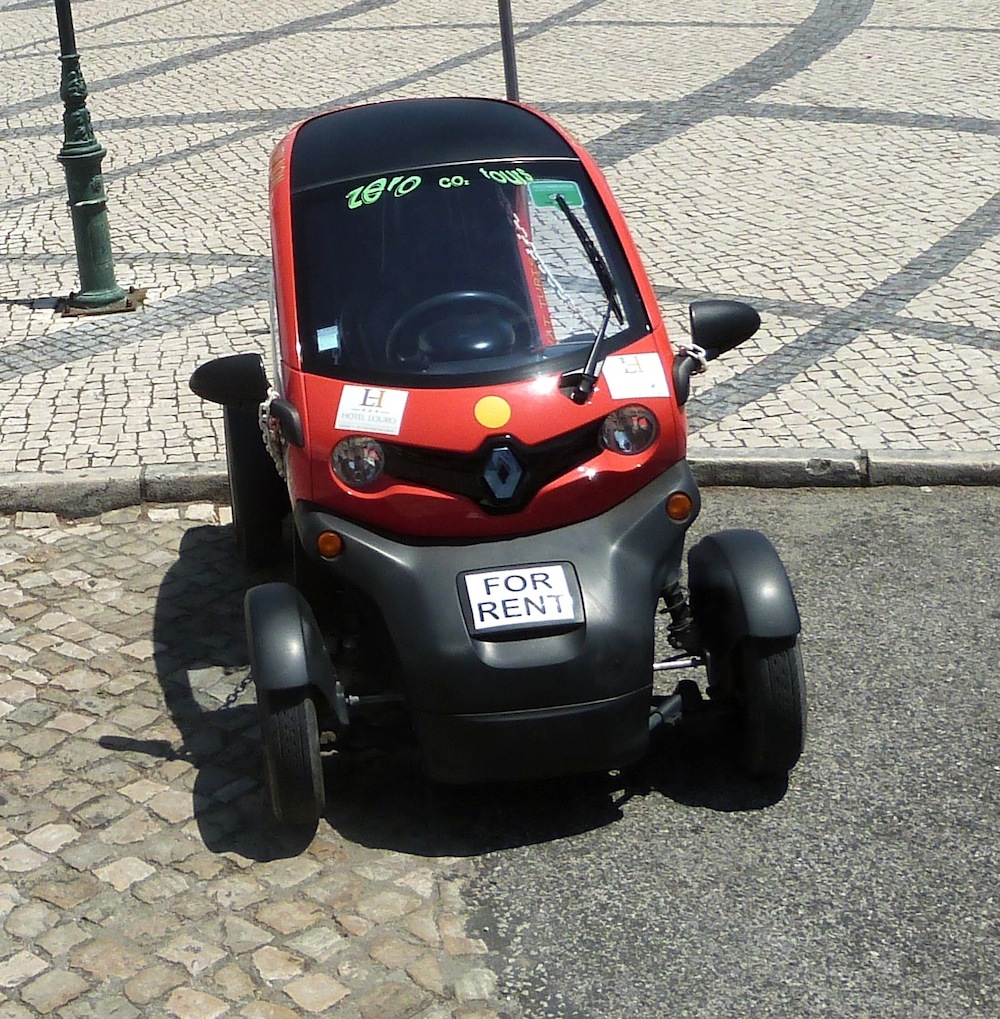
Seems two passengers can get in the back of these and the driver gives a little guided tour. Didn't get a chance but wouldn't mind one of these to use in some of the country villages we often visit in the UK.

And so as not to leave you with this as the final image, here's another beautiful example of Portuguese tiling, and the wonderful countryside around Obidos.


We weren’t there for more than a few hours, and I was more taken with the tiled buildings, and the view of the river than anything else, so am unable to report what the city has to offer. I would recommend a trip on the water to fully appreciate the expanse of the bridges.


The most famous of these is the one modelled on San Francisco’s Golden Gate bridge. 230 above the water, it is possible to view the cars passing overheard and it’s a good opportunity to make use of a camera with a good zoom function.

The bridge was originally called Salazar. These days its official name is the 25th April Bridge after the 1974 revolution, but some also refer to it as the Tagus Bridge (the waterfront lying along the River Tagus), or more simply, ‘The Bridge’.

On one side stands the towering statue of Christ, resembling the one in Rio de Janeiro, this one paid for by the women of Portugal to give thanks their men were not involved in the Second World War. The plinth is 270 feet high served by a lift and steps and a promise of a good view. The statue is 90 feet high. I struggled to get this shot of the statue, bridge and boat, taking several and hoping for the best. I got the shot I wanted.
Thought to have been found by Ulysses, during its history Lisbon has been occupied by both the Romans, and the Moors, taken by English Crusaders who assisted the King of Portugal. This history is far more complex than I’m stating in a couple of sentences but is useful to bare in mind when viewing much of the architecture.

There’s much to see and do beyond Lisbon and I can think of several places we heard about that tempt us to return. We had the chance to visit only one outlying area and so chose Obidos.

Though busy with tourists if you’re looking for a picture postcard it’s a good choice. With it’s towering 12th century castle ramparts around a walled city of bright colours and cobbled streets, it’s a romantic spot.


One word of warning we were given -- there’s no one ‘policing’ people going on the wall and many like to walk around the city from the top. However, we were told that they’d already had several accidents this year as they do every year. Tourists taking photos forget there’s a drop to one side, step back to take a photograph, and...you don’t need me to explain the rest. If unsteady don’t make the attempt and don’t become distracted!

We went in a few of the seemingly tiny shops and discovered they extend far back room upon room in some cases. There's plenty to find for the browser or shopper. Having cleared much from my house in recent months and having a couple of pieces of Portugal pottery all I bought home was the photographs.


Seems two passengers can get in the back of these and the driver gives a little guided tour. Didn't get a chance but wouldn't mind one of these to use in some of the country villages we often visit in the UK.
And so as not to leave you with this as the final image, here's another beautiful example of Portuguese tiling, and the wonderful countryside around Obidos.


Monday, August 01, 2016
A quick stop at Fuerteventura
This week’s hop takes us to what was our least favourite stop on our
five island tour: Fuerteventura. This is just personal taste. It’s a
beautiful place in many ways and, having considered a holiday there many
years ago, we were delighted to finally see the sand dunes. However,
we’re not beach people and find the typical tourist spots unappealing.

Fuerteventura is closest to the African continent, second in size to the largest, Tenerife, with Lanzarote being the nearest of the other islands. Fuerteventura is part of Las Palmas province, a self-governing collective of Spain. The original inhabitants likely came from North Africa.

Few attempted to settle permanently moving on to more hospitable areas. The island has seen its share of conflict, conquered, disregarded, considered to be of little interest, the populace sold into slavery, and the island raided by pirates during a turbulent history. The island’s fortunes didn’t change eminently until the 1960s with the introduction of mass tourism.

We decided to head to Corralejo, the largest area of dunes. The full stretch runs 10 kilometres along the coast, reaching as far as 203 kilometres inland, the area--know as Parque Natural de las Dunas de Corralejo--being a protected region.
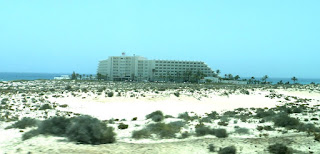
The harbour is pleasant and there’s plenty of available shopping. Touts attempting to drag tourists into restaurants or to attend presentations were easily ignored (I suspect more easily and less aggressive than on some islands), but this was still too much of a typical tourist trap for us.

The dunes are impressive and beautiful, but for people who don’t like to sunbathe, a walk and a few hours were good enough.


Fuerteventura is closest to the African continent, second in size to the largest, Tenerife, with Lanzarote being the nearest of the other islands. Fuerteventura is part of Las Palmas province, a self-governing collective of Spain. The original inhabitants likely came from North Africa.

Few attempted to settle permanently moving on to more hospitable areas. The island has seen its share of conflict, conquered, disregarded, considered to be of little interest, the populace sold into slavery, and the island raided by pirates during a turbulent history. The island’s fortunes didn’t change eminently until the 1960s with the introduction of mass tourism.

We decided to head to Corralejo, the largest area of dunes. The full stretch runs 10 kilometres along the coast, reaching as far as 203 kilometres inland, the area--know as Parque Natural de las Dunas de Corralejo--being a protected region.

The harbour is pleasant and there’s plenty of available shopping. Touts attempting to drag tourists into restaurants or to attend presentations were easily ignored (I suspect more easily and less aggressive than on some islands), but this was still too much of a typical tourist trap for us.

The dunes are impressive and beautiful, but for people who don’t like to sunbathe, a walk and a few hours were good enough.


Monday, July 25, 2016
Hola La Palma
I continue our hop around the canaries this week with a stop at La
Palma. We were told La Palma is the world's steepest island. Whether
true we were also informed it's lush and green, and that's definite.
We've never seen so many banana plants.


Drive from one side to the other and emerge from a tunnel between contrasting landscapes; this is because the climate varies on the two sides. The north is divided by deep ravines and surrounding mountains. The south has small volcanoes with smatterings of volcanic scenery that in pockets of land reminded me of Iceland, while the whole isle enjoys high temperatures all year and plenty of rain.


Though the island has a turbulent history, more recently it's a peaceful, prosperous place. Locals have no wish to see huge holiday resorts or high-rise hotels so though welcoming it's more unspoilt than some islands.


I want to finish with one highlight. We heard good feedback on Plaza La Glorieta in La Las Machas. It's much smaller than we imagined and one comes upon it quite suddenly in a landscape where it's unexpected and even seems a little out of place. We anticipated a more typical tourist location, not this small quiet, tranquil area. The mosaic park is open with no admission charge. Designed by Luis Morera, a local artist, the detail on the mosaics made this a delightful place to stop and is artistically inspirational.


Adios, La Palma


Drive from one side to the other and emerge from a tunnel between contrasting landscapes; this is because the climate varies on the two sides. The north is divided by deep ravines and surrounding mountains. The south has small volcanoes with smatterings of volcanic scenery that in pockets of land reminded me of Iceland, while the whole isle enjoys high temperatures all year and plenty of rain.


Though the island has a turbulent history, more recently it's a peaceful, prosperous place. Locals have no wish to see huge holiday resorts or high-rise hotels so though welcoming it's more unspoilt than some islands.


I want to finish with one highlight. We heard good feedback on Plaza La Glorieta in La Las Machas. It's much smaller than we imagined and one comes upon it quite suddenly in a landscape where it's unexpected and even seems a little out of place. We anticipated a more typical tourist location, not this small quiet, tranquil area. The mosaic park is open with no admission charge. Designed by Luis Morera, a local artist, the detail on the mosaics made this a delightful place to stop and is artistically inspirational.


Adios, La Palma

Monday, July 18, 2016
La Gomera
When people talk of the Canary Islands one instantly thinks of noise, lager louts, and the party scene reputation of tourism, none of which are to our taste. One of the main reasons we travel is to view stunning scenery, of which the islands have plenty.
Our second stop on our recent wanderings was the little-known island of La Gomera, which lies fifteen miles west of Tenerife, and thirty miles south-east of La Palma. In fact, it's easy to see Tenerife on a clear day and one of my favourite photographs I took on the whole trip had to be of the highest peak seeming to grow out of the clouds.


The roughly circular island is just thirteen by fifteen miles and is full of contrast. No one is certain from where the original inhabitants came to this small island where there is little to do, though North Africa is a possibility, and the Greek and Romans definitely knew of the area. Mediterranean civilisation knew of the islands as the Elysian Fields. Its population of 24,000 (10,000 of which live in the capital of San Sebastian) largely subsist on fishing or agriculture, with a small but growing tourist industry. Note: Columbus came this way, and though we didn’t have time to see it, the house in which he stayed and drew water from the well for his voyages has been fully restored.

Though essentially arid, La Gomera is varied in its landscape. With cliffs and deep valleys at first glance one might expect to spot a film crew shooting a wild west movie in a place like this:


The average temperature ranges between 65 to 75, though to us it felt far hotter for the time we were there. This was definitely the hottest island we visited in the area that is known for year round ‘springlike’ weather. In fact, we wanted to get out of the heat for a bit so decided to head for Garajonay National Park, which, we had been told, was liable to be cool and misty. Not so the day we went. Take your rain jackets they said. People were giving us funny looks.

Reminded us of Puzzlewood in the UK.

No, I didn't take the tree shot at an angle--that's how it is.
The forest looks primeval in places and we had heard many good things and read some wonderful reviews calling the place magical. Our own take… Yes, we loved it, and it was good to get a chance to really ‘walk’, get away from crowds, take in the trees and flowers, but maybe one needs a misty day to find the place magical. Indeed, the online photos I've found look far more mystical than the views we saw on a dry, sun-baked day.

Maybe we weren't the only ones who wanted to rest in the heat.
We’ve also been rather spoilt by our visit to Puzzlewood near the Forest of Dean in the UK, which rivals the national park in scenery if not size. Anyone who has been to and loved the forest on La Gomera might be amazed what is on our own doorstep.
Our second stop on our recent wanderings was the little-known island of La Gomera, which lies fifteen miles west of Tenerife, and thirty miles south-east of La Palma. In fact, it's easy to see Tenerife on a clear day and one of my favourite photographs I took on the whole trip had to be of the highest peak seeming to grow out of the clouds.


The roughly circular island is just thirteen by fifteen miles and is full of contrast. No one is certain from where the original inhabitants came to this small island where there is little to do, though North Africa is a possibility, and the Greek and Romans definitely knew of the area. Mediterranean civilisation knew of the islands as the Elysian Fields. Its population of 24,000 (10,000 of which live in the capital of San Sebastian) largely subsist on fishing or agriculture, with a small but growing tourist industry. Note: Columbus came this way, and though we didn’t have time to see it, the house in which he stayed and drew water from the well for his voyages has been fully restored.
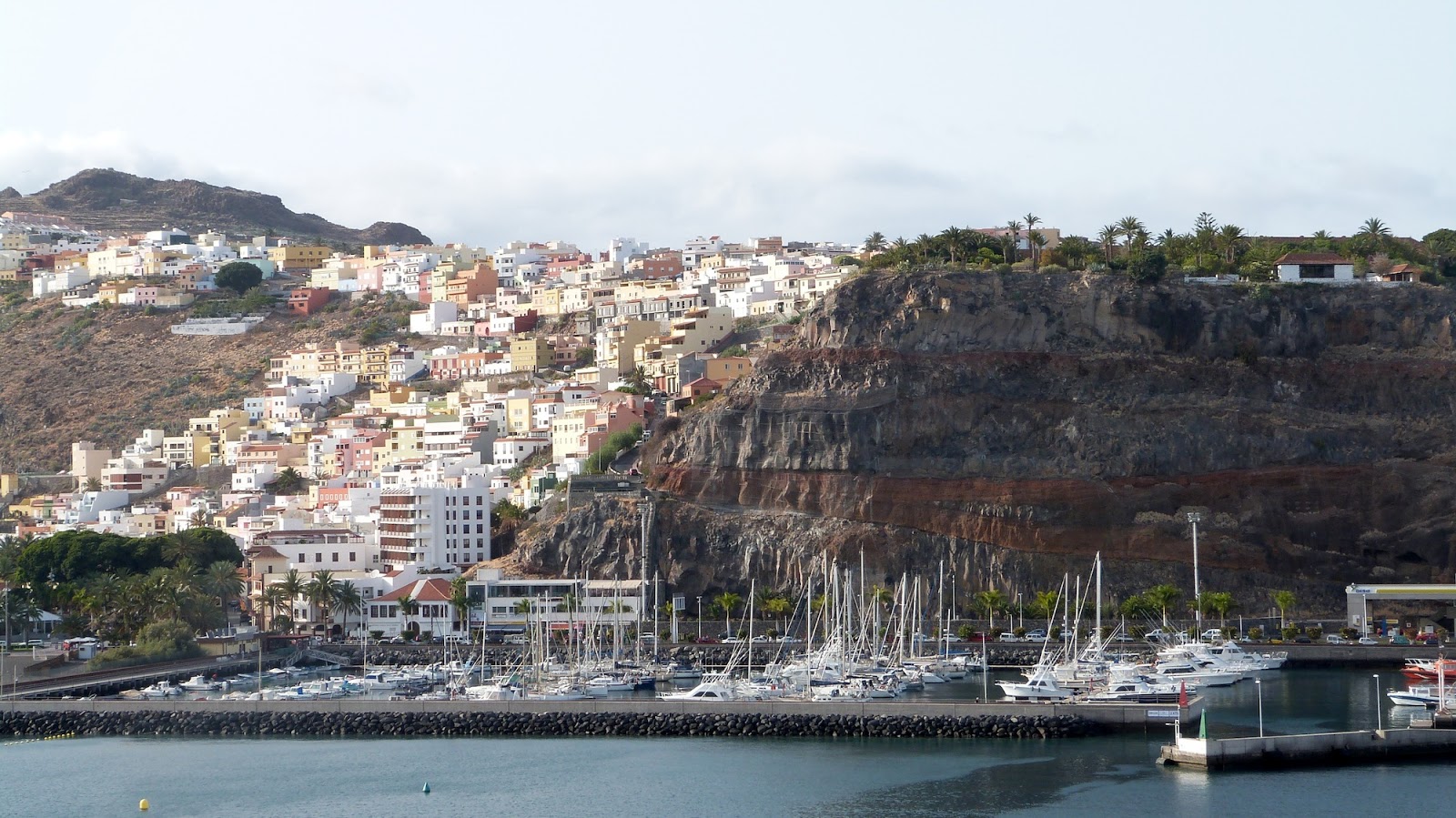
Though essentially arid, La Gomera is varied in its landscape. With cliffs and deep valleys at first glance one might expect to spot a film crew shooting a wild west movie in a place like this:


The average temperature ranges between 65 to 75, though to us it felt far hotter for the time we were there. This was definitely the hottest island we visited in the area that is known for year round ‘springlike’ weather. In fact, we wanted to get out of the heat for a bit so decided to head for Garajonay National Park, which, we had been told, was liable to be cool and misty. Not so the day we went. Take your rain jackets they said. People were giving us funny looks.

Reminded us of Puzzlewood in the UK.

No, I didn't take the tree shot at an angle--that's how it is.
The forest looks primeval in places and we had heard many good things and read some wonderful reviews calling the place magical. Our own take… Yes, we loved it, and it was good to get a chance to really ‘walk’, get away from crowds, take in the trees and flowers, but maybe one needs a misty day to find the place magical. Indeed, the online photos I've found look far more mystical than the views we saw on a dry, sun-baked day.

Maybe we weren't the only ones who wanted to rest in the heat.
We’ve also been rather spoilt by our visit to Puzzlewood near the Forest of Dean in the UK, which rivals the national park in scenery if not size. Anyone who has been to and loved the forest on La Gomera might be amazed what is on our own doorstep.
Monday, July 11, 2016
Bom dia, Madeira
Over the next few weeks, I thought to share some holiday snaps with you as I sort through them. It takes time. I do tend to get carried away with the camera and it's difficult to choose a 'few' shots. We went somewhere new for us in the world.
When visiting the Canary Islands it's too easy to forget where you are. We'll start where we began: Madeira. The archipelago lies in the Atlantic Ocean, north of the Canaries, and west of Morocco. I've been to Portugal a few years ago yet never spared a thought for the Portuguese islands lying 600 miles south-west of Lisbon.
Bom dia (Good day), Madeira.
MISTY MORNING AT FUNCHAL (Madeira's Capital)

Though a comparatively short stop, I knew right away I'll happily revisit (and hope to). I opted not to ride the cable car this time, though I would if we ever return. If interested, footage can be found on someone's trip aboard on youtube. There's much else to see and do in Funchal, not least of all to try Madeira cake which puts our supermarket variety to shame. I was also rather taken with Poncha -- the traditional alcoholic drink made from the island's sugar cane, containing honey, and aguardiente de cana (a distilled spirit) and different fruit juices, though we were told usually orange, and the best way to describe ours is as 'alcoholic orange juice'. Locals imbibe to 'ward off colds and flu'; I guess the orange juice makes it healthy, right?
My second highlight has to be the good reason it's referred to as an island of flowers. I was naturally going to be instantly fond of Madeira because it's green. Mountainous with deep valleys, it's scenic qualities is one of those I love best.




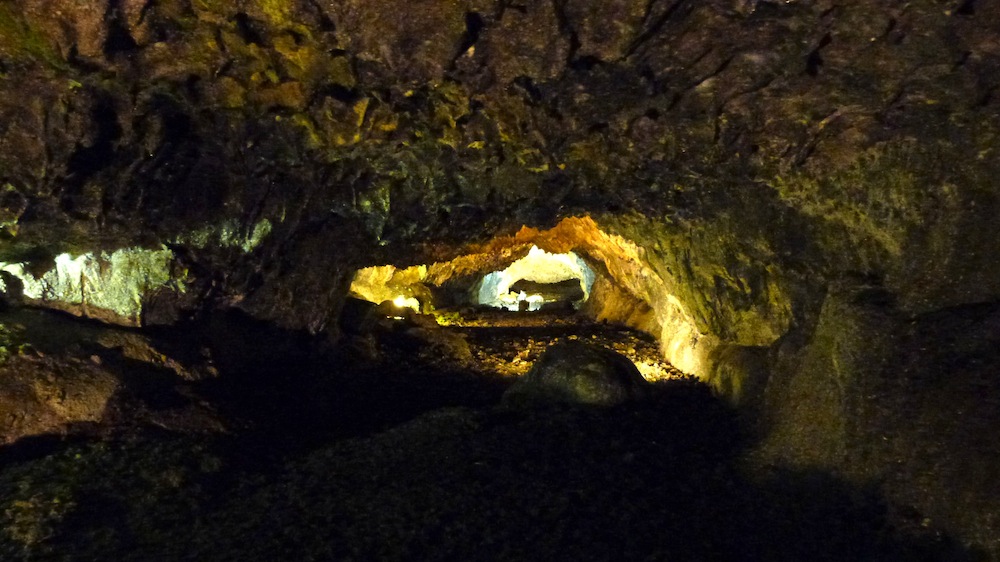
I decided to visit the caves at Sao Vicente for personal grounds I had heard these caves were like visiting no other and it's true. It's cool and wet so I needed my rain jacket, not outside once on this holiday, but underground exploring Madeira's geological past. The display at the end of the cave walk is a little dated but the film shown enlightens the visitor on how the islands formed and change. A volcanic eruption 890 years ago created the caves, and after creating the inner world for my Space 1889 story 'A Fistful of Dust' set on Phobos, I wanted to explore. These are lava tubes. The idea of walking where lava once flowed was too good for me to ignore.
(What do you think, Andy? A good setting?)


Adeus (Goodbye)

When visiting the Canary Islands it's too easy to forget where you are. We'll start where we began: Madeira. The archipelago lies in the Atlantic Ocean, north of the Canaries, and west of Morocco. I've been to Portugal a few years ago yet never spared a thought for the Portuguese islands lying 600 miles south-west of Lisbon.
Bom dia (Good day), Madeira.
MISTY MORNING AT FUNCHAL (Madeira's Capital)

Though a comparatively short stop, I knew right away I'll happily revisit (and hope to). I opted not to ride the cable car this time, though I would if we ever return. If interested, footage can be found on someone's trip aboard on youtube. There's much else to see and do in Funchal, not least of all to try Madeira cake which puts our supermarket variety to shame. I was also rather taken with Poncha -- the traditional alcoholic drink made from the island's sugar cane, containing honey, and aguardiente de cana (a distilled spirit) and different fruit juices, though we were told usually orange, and the best way to describe ours is as 'alcoholic orange juice'. Locals imbibe to 'ward off colds and flu'; I guess the orange juice makes it healthy, right?
My second highlight has to be the good reason it's referred to as an island of flowers. I was naturally going to be instantly fond of Madeira because it's green. Mountainous with deep valleys, it's scenic qualities is one of those I love best.


I decided to visit the caves at Sao Vicente for personal grounds I had heard these caves were like visiting no other and it's true. It's cool and wet so I needed my rain jacket, not outside once on this holiday, but underground exploring Madeira's geological past. The display at the end of the cave walk is a little dated but the film shown enlightens the visitor on how the islands formed and change. A volcanic eruption 890 years ago created the caves, and after creating the inner world for my Space 1889 story 'A Fistful of Dust' set on Phobos, I wanted to explore. These are lava tubes. The idea of walking where lava once flowed was too good for me to ignore.
(What do you think, Andy? A good setting?)


Adeus (Goodbye)

Subscribe to:
Posts (Atom)