Monday, August 01, 2016

A quick stop at Fuerteventura

This week’s hop takes us to what was our least favourite stop on our five island tour: Fuerteventura. This is just personal taste. It’s a beautiful place in many ways and, having considered a holiday there many years ago, we were delighted to finally see the sand dunes. However, we’re not beach people and find the typical tourist spots unappealing.

Fuerteventura is closest to the African continent, second in size to the largest, Tenerife, with Lanzarote being the nearest of the other islands. Fuerteventura is part of Las Palmas province, a self-governing collective of Spain. The original inhabitants likely came from North Africa.

Few attempted to settle permanently moving on to more hospitable areas. The island has seen its share of conflict, conquered, disregarded, considered to be of little interest, the populace sold into slavery, and the island raided by pirates during a turbulent history. The island’s fortunes didn’t change eminently until the 1960s with the introduction of mass tourism.

We decided to head to Corralejo, the largest area of dunes. The full stretch runs 10 kilometres along the coast, reaching as far as 203 kilometres inland, the area--know as Parque Natural de las Dunas de Corralejo--being a protected region.


The harbour is pleasant and there’s plenty of available shopping. Touts attempting to drag tourists into restaurants or to attend presentations were easily ignored (I suspect more easily and less aggressive than on some islands), but this was still too much of a typical tourist trap for us.


The dunes are impressive and beautiful, but for people who don’t like to sunbathe, a walk and a few hours were good enough.


Monday, July 25, 2016

Hola La Palma

I continue our hop around the canaries this week with a stop at La Palma. We were told La Palma is the world's steepest island. Whether true we were also informed it's lush and green, and that's definite. We've never seen so many banana plants.


Drive from one side to the other and emerge from a tunnel between contrasting landscapes; this is because the climate varies on the two sides. The north is divided by deep ravines and surrounding mountains. The south has small volcanoes with smatterings of volcanic scenery that in pockets of land reminded me of Iceland, while the whole isle enjoys high temperatures all year and plenty of rain.


Though the island has a turbulent history, more recently it's a peaceful, prosperous place. Locals have no wish to see huge holiday resorts or high-rise hotels so though welcoming it's more unspoilt than some islands.


I want to finish with one highlight. We heard good feedback on Plaza La Glorieta in La Las Machas. It's much smaller than we imagined and one comes upon it quite suddenly in a landscape where it's unexpected and even seems a little out of place. We anticipated a more typical tourist location, not this small quiet, tranquil area. The mosaic park is open with no admission charge. Designed by Luis Morera, a local artist, the detail on the mosaics made this a delightful place to stop and is artistically inspirational.


Adios, La Palma

Monday, July 18, 2016

La Gomera

When people talk of the Canary Islands one instantly thinks of noise, lager louts, and the party scene reputation of tourism, none of which are to our taste. One of the main reasons we travel is to view stunning scenery, of which the islands have plenty.


Our second stop on our recent wanderings was the little-known island of La Gomera, which lies fifteen miles west of Tenerife, and thirty miles south-east of La Palma. In fact, it's easy to see Tenerife on a clear day and one of my favourite photographs I took on the whole trip had to be of the highest peak seeming to grow out of the clouds.


The roughly circular island is just thirteen by fifteen miles and is full of contrast. No one is certain from where the original inhabitants came to this small island where there is little to do, though North Africa is a possibility, and the Greek and Romans definitely knew of the area. Mediterranean civilisation knew of the islands as the Elysian Fields. Its population of 24,000 (10,000 of which live in the capital of San Sebastian) largely subsist on fishing or agriculture, with a small but growing tourist industry. Note: Columbus came this way, and though we didn’t have time to see it, the house in which he stayed and drew water from the well for his voyages has been fully restored.


Though essentially arid, La Gomera is varied in its landscape. With cliffs and deep valleys at first glance one might expect to spot a film crew shooting a wild west movie in a place like this:


The average temperature ranges between 65 to 75, though to us it felt far hotter for the time we were there. This was definitely the hottest island we visited in the area that is known for year round ‘springlike’ weather. In fact, we wanted to get out of the heat for a bit so decided to head for Garajonay National Park, which, we had been told, was liable to be cool and misty. Not so the day we went. Take your rain jackets they said. People were giving us funny looks.


Reminded us of Puzzlewood in the UK.


No, I didn't take the tree shot at an angle--that's how it is.

The forest looks primeval in places and we had heard many good things and read some wonderful reviews calling the place magical. Our own take… Yes, we loved it, and it was good to get a chance to really ‘walk’, get away from crowds, take in the trees and flowers, but maybe one needs a misty day to find the place magical. Indeed, the online photos I've found look far more mystical than the views we saw on a dry, sun-baked day.


Maybe we weren't the only ones who wanted to rest in the heat.

We’ve also been rather spoilt by our visit to Puzzlewood near the Forest of Dean in the UK, which rivals the national park in scenery if not size. Anyone who has been to and loved the forest on La Gomera might be amazed what is on our own doorstep.

Monday, July 11, 2016

Bom dia, Madeira

Over the next few weeks, I thought to share some holiday snaps with you as I sort through them. It takes time. I do tend to get carried away with the camera and it's difficult to choose a 'few' shots. We went somewhere new for us in the world.

When visiting the Canary Islands it's too easy to forget where you are. We'll start where we began: Madeira. The archipelago lies in the Atlantic Ocean, north of the Canaries, and west of Morocco. I've been to Portugal a few years ago yet never spared a thought for the Portuguese islands lying 600 miles south-west of Lisbon.

Bom dia (Good day), Madeira.

MISTY MORNING AT FUNCHAL (Madeira's Capital)


Though a comparatively short stop, I knew right away I'll happily revisit (and hope to). I opted not to ride the cable car this time, though I would if we ever return. If interested, footage can be found on someone's trip aboard on youtube. There's much else to see and do in Funchal, not least of all to try Madeira cake which puts our supermarket variety to shame. I was also rather taken with Poncha -- the traditional alcoholic drink made from the island's sugar cane, containing honey, and aguardiente de cana (a distilled spirit) and different fruit juices, though we were told usually orange, and the best way to describe ours is as 'alcoholic orange juice'. Locals imbibe to 'ward off colds and flu'; I guess the orange juice makes it healthy, right?

My second highlight has to be the good reason it's referred to as an island of flowers. I was naturally going to be instantly fond of Madeira because it's green. Mountainous with deep valleys, it's scenic qualities is one of those I love best.


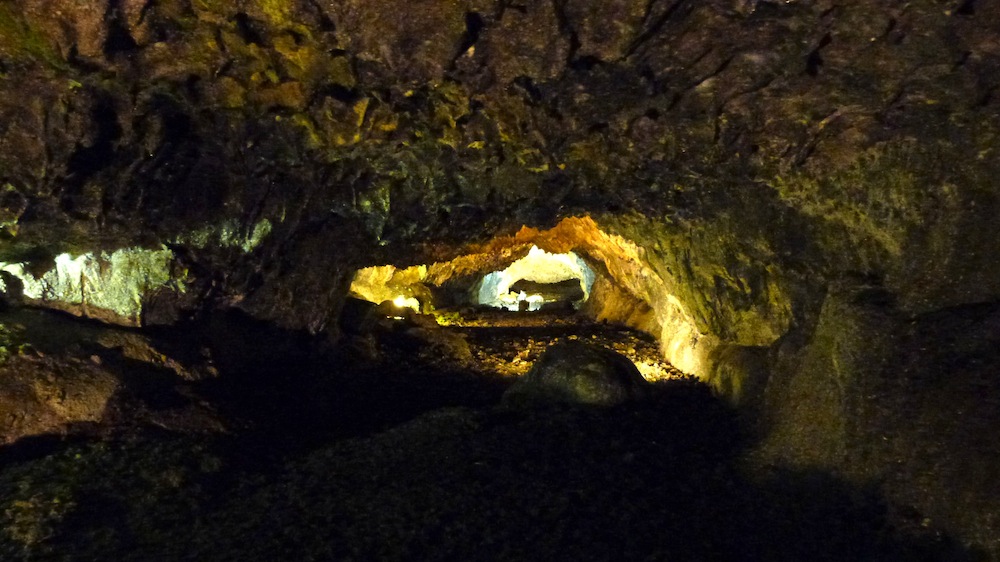
I decided to visit the caves at Sao Vicente for personal grounds I had heard these caves were like visiting no other and it's true. It's cool and wet so I needed my rain jacket, not outside once on this holiday, but underground exploring Madeira's geological past. The display at the end of the cave walk is a little dated but the film shown enlightens the visitor on how the islands formed and change. A volcanic eruption 890 years ago created the caves, and after creating the inner world for my Space 1889 story 'A Fistful of Dust' set on Phobos, I wanted to explore. These are lava tubes. The idea of walking where lava once flowed was too good for me to ignore.

(What do you think, Andy? A good setting?)


Adeus (Goodbye)


Monday, July 04, 2016

Happy Anniversary

Been absent for a couple of weeks, away on holiday to celebrate a special anniversary. Some highlights on what we saw in other blogs but for now I’ll say the holiday was good, never as relaxing and restorative as people hope they will be, but we had an amazing meal on our anniversary in a special restaurant. Another couple we met went the night before so told the staff it was our anniversary and they decorated the desert plates.


Mine was the rectangle plate and smaller dessert, a chocolate pudding with sorbet. Best chocolate creation I may have ever tasted. Want the recipe. The husband wondered why they felt he needed to chill. lol

Thursday, June 16, 2016

An Absolute Pleasure

This is going to be my last blog for a couple of weeks because I'm taking a break. I hope to get a work I've been editing through its first re-editing phase before the end of the week. This is more a 'bye for now' than an actual blog, but I have an important date to celebrate that will be an 'absolute pleasure' for me. We all face milestones in our lives and I have one on the way that's something of an achievement.

On that note (forgive the dubious segue), I'm taking a moment to reflect on something else that put a smile on my face in January 2013 (where has the time gone), when my Steampunk adventure -- co-authored with Andy Frankham-Allen -- Mundus Cerialis: Space 1889 & Beyond was called 'an absolute pleasure to read'. You can read the full review by going to The Traveler's Steampunk Blog.

I'll return with news of where I've been and why soon. Stay well, stay happy, and Happy Reading!

Monday, June 13, 2016

Error in Judgement


Just the other week I blogged about someone who contacted a writer suggesting she work for free. I noted how common this is. These proclamations are often met with disbelief. Fortunately, I stumbled across a news item that illustrates my claims.

The ad provoked outrage with posters taking to social media. Artist Conor Collins stated the supermarket should deduct funds from its CEOs so "'starving artist' wouldn't have to be a thing". People asked if they could claim a free food shop, and often referenced the company's multi-billion turnover, lambasting them with the facts of less than 10k yearly salaries for artists.

The supermarket  apologised and declared the advert as an 'error of judgement', but I see it reports they describe it as having occurred following a discussion considering ways to improve the canteen and 'offer an opportunity to the local community'. Being asked to work for free is an 'opportunity' writers and artists are sick of. Yet despite the backlash, I've seen some posters stating they saw nothing wrong with this.

In plain English, it is the equivalent of someone saying toil in our office doing the filing for a month without pay and we'll say thanks, pat you on the back, and send you out into the world with that on your resume. That may sound a reasonable deal if you're a school leaver, if there's a chance of a good reference, maybe even a job at the end of those four weeks.

The catch comes when they can get another school leaver in for the following month and the one after that, and perpetually have their filing done for free.

The catch comes when no one cares what you have on your resume and even views the free work as meaningless -- after all, if you were any good, someone would have been willing to pay you, wouldn't they?

The catch comes when you're no longer eighteen, but ten years have passed, or twenty, and companies are still offering you the same 'opportunities' for exposure rather than pay.

This is feeding into all creative areas. Artists, writers, musicians, photographers... Wait, photographers? Yes. It's an endless list. Watch those news items where the newscasters ask members of the public to send in photographs? Those photos are worth money! A friend of mine is a professional photographer, has worked for local newspapers for years. The highest paid photo earned £200, but that is far from the norm, and the chances are that amount would not be offered now because the paper could put out a call for anyone who had taken a photo on their phone to send it in for free. This friend has had work and payment for remaining employment halved, and most times no longer gets expenses. By the time the cheque has cashed, it hardly covers the cost of petrol to go out and take the shot. All the viewers sending in free photos to newspapers and news channels are making photographers unemployed.

Somehow, it's become the 'norm' to ask for something for nothing. The creative arts is suddenly unimportant, regarded as 'play', not real work, despite many in these enterprises working longer hours than the average office-worker for far less pay. Paintings, books, photos, music...these things are deemed as for leisure and in some bizarre twist have become meaningless. My solution to that is we'll take them away. Imagine the world without these things. Imagine *gasp* no TV, because someone has to 'write' the story. Someone has to design the sets. Someone has to paint the backdrop.

If you're not part of the solution, you are part of the problem. If you think it's okay to ask anyone to work for free, you are the problem.

Sainsbury's have had many slogans, one being 'Live Well For Less'. I guess that's a typo and they really meant 'Live On Less'. In 2005, apparently its slogan was 'Making Life Taste Better'. Sorry, Sainsbury's. You've left an appalling taste.

Monday, June 06, 2016

Don't call yourself a fan. Don't you dare!

This week I'm passing on this excellent post by Rosalie Stanton.

Read. Seriously. Read this. To anyone who thinks the subject of asking a writer to produce work for free is okay I've news. Anyone complaining about the cost of books needs to reconsider why they're protesting.

Let's compare creating a book with going to the movies. Some people go often, some occasionally. Some think nothing of the cost of a couple of hours of entertainment. Others complain about the charge for the tickets and the food, but most still add popcorn and a drink to the price of entry.
Some of these patrons are aware that the cinema most often makes its money on 'concessions' -- that's the food and drinks. All that popcorn is often the only reason a cinema manages to stay open, and it's why the price is so high even though popcorn costs almost nothing to manufacture.

The ticket price mostly goes to the movie producers and we all know that movie-making, especially the big action blockbusters, is expensive. Look at the credits -- that long list of people employed, all of whom ask for salaries. Some films now even list the number of jobs the project created. Movie-making is an entertainment 'industry'. In other words, a BUSINESS.

Making books is also a BUSINESS.

I don't care if the writer writes for leisure, or hopes to make this a vocation, to the publisher it's BUSINESS, and books often provide several hours, sometimes a lifetime, of pleasure.

Of course, there are self-published writers but it's still a business. They are going it alone and so every step falls to them. Chances are works from a publishing company or 'good' self-published books have undergone a process. This process involves writing the story -- the hours spent by the person creating, researching, plotting, putting the words down on a blank page -- and editing rounds. Edits should be undertaken by an author before the work is ever submitted. The finished manuscript is often considered by a committee. Even accepted, the story is far from complete. Next stop is for the work to land in the hands of an editor. There are copy and line editors, proofreaders, and cover artists...all requiring payment. If there's a marketing department that costs, too. With help or not the author faces fours spent marketing their product. Yes, product. Let's call the book what it really is for the remainder of this blog.

If the PRODUCT goes to print, there are printing charges. If it's an ebook someone has to create the files and try to make sure all formats work. Sometimes both these costs apply. The publisher takes their cut. The writer gets his or hers. If there's an agent to pay that's another share right there, and last but never least taxes.

It's business. Profit needs to be made.

With ebooks, those who read and return or file share are nothing more than thieves. True, people lend print products but it's a greyer area than many realise. It's 'allowed' only because no one likes the idea of printed products being destroyed, because many are sold through charity shops so further good comes of passing products on, and the circulation of some products can gain an author more readers, but in all these instances the purchaser of the PRODUCT gives up their original copy and in the case of a loan risks losing it.

People who share or duplicate work in a criminal act deserve nothing better than a hefty fine if not jail time. What that person is NOT is any friend or fan.

To add to this already insulting state of affairs, Rosalie's post focuses on a writer asked by a 'fan' to work for free. Her response and mine is not author meltdown. This is authors telling you like it is. It's the equivalent of...you. Yes, YOU, the one reading this -- it's YOU going into the office, factory, shop, hospital...wherever you work, for free, and then trying to heat your home and put food on your table.

Since when did writing become a joke? Since when did it become a game?

How stupid does someone need to be not to understand writing is a JOB. The majority of writers already work for well below minimum wage. In what universe did a reader think it okay to contact a writer to ask that person to WORK for free? In many cultures, that would be called slavery.

Incidentally, where do you think the story came from so that a movie can be made?

I'll leave Harlan here to speak for writers everywhere.

Wednesday, May 25, 2016

Decisions Decisions

This is an edited re-post of an older blog, but the contents remain relevant.

All writers get moments when they feel like giving up. Hard to say why this is. A long wait for a response, a snarky comment at the worst possible moment, the longest winter that a person can remember... Bad news can make other areas of life seem unworthy and for the writer sometimes their work takes the brunt. I doubt I will ever give up writing but I am aware I do need to attend to more than just one genre -- I love to write as I read, meaning anything and everything, and getting to join the Space, 1889 steampunk project was a proverbial deep breath of crisp air. It was also exhausting. One title had to be turned over at very short notice, was the second story I worked on and my first ever co-authored book. The first piece I wrote came out a few months later and required a good deal of research. Anyone reading would probably be amazed to see the list of study material. No doubt, it's not immediately obvious, and no reason should it be -- the whole point is the reader shouldn't necessarily know it's there.

I'm straying a little, though. The project reminded me of how I like many styles and genres, and that we all need a rest. At the time, I was with three publishers who take romance, two of which specialised in erotica, and one who was a multi-genre publisher. I had considered approaching a fourth, but at the fear of spreading myself too thin, I never did. I'm still with three, though one closed to be replaced with another, and I only recently published with one of them and may only continue with two. Any good writer or publisher will say it's best not to have even the most delicious eggs (even chocolate ones) laid by one hen in one tiny basket.

Publishers go under. Writing is like any business. Sometimes people fall out, there are differences of opinion. Any number of reasons exist as to why a writer may one day wish to part ways with a publisher or vice versa. It's good to have somewhere to go. Being with various publishers also extends an author's presence and readership. And let's not forget, different publishers are open to contrasting products. The best 'business' decision is choosing the right story and the correct publisher, matching a suitable pair, and deciding whether to spread the work or take on extra. Writing isn't all about the story -- it's about seemingly straightforward decisions having consequences. Even the writer can be so immersed in the story to forget that.

Monday, May 16, 2016

The Wolf Moon

My short story The Wolf Moon finally released the other week and continues my foray into Dark Fiction. I plan to blog another time about how the story came into being, but for now, the story can be found in the Fox Spirit anthology Winter Tales. Though these tales may seem surprising to my romance readers, this type of fiction is where I started. What's held me back from pursuing more in this genre is the lack of an idea to produce a full-length novel. I've written long romances and long steampunk stories, and played with numerous themes, but nothing that comes close to the darkness explored in my short stories...until now. I'm pleased to say I've an idea that's nagging at me. The trouble is, right now I don't have the time to write it. I'm working on a project that I just submit soon although I don't know whether it will be suitable, and I've promised to re-work and re-release some romances. This basically involves as much editing as writing. I'm ploughing ahead as fast as my muse and ability to type will allow.

Fox Spirit was a good publisher to add to my Dark Fiction resume: shortlisted for the Best Indie Press twice in three years by the British Fantasy Society, their mission statement summarises the belief that day to day life lacks a few things, namely the fantastic, the magical, mischievous and a touch of the horrific. They aim to produce books 'full of wonder and mischief delivered with a sharp bite'. My short story definitely applies. Diana may or may not be a hunter, but Gabriel is no angel.


Diana, the huntress. Her mother called winter a time of silence. For Diana, most of her life is quiet, her only companions wolves. Known as a witch by those in the human settlement even her rare visits to town are unwelcome.

Gabriel, named after the angel; although he's no heavenly messenger, he refuses to trap what the locals want him to catch. When he sees Diana, he's on the hunt for different prey.

Two people, strangers to each other, both outsiders… A harsh winter is upon them, but when their paths cross it will take a little ingenuity to survive the coldest of seasons.

Shiver under The Wolf Moon, one of a collection of Winter Tales.

Monday, May 09, 2016

Guest Spot: Chantal Noordeloos

Today in honour of my Dark Fiction release, I’m purposely throwing the spotlight on author Chantal Noordeloos as a writer who is as in tune with my sensibilities as she is also apart from them. I understand her intentions behind her darker work, as she would no doubt understand mine. As her biography states, she’s a writer born in the Hague, lives in the Netherlands, with what strikes me as the perfect balance of family: a husband who shares the right level of unconventionality and a wily daughter as amusing as she is ingenious -- a word that suits the whole Noordeloos ensemble and zeal for life. It is this love of life that may make one question why Chantal visits such dark realms in her writing: one of those cases where the question itself may supply the answer, for these tales face our darkest fears and often drive back the shadows or, at least, greet what lurks within them head-on.

Wrath begins with a first-person telling of a vicious attack on an unknown woman, but what may seem like the end of her journey turns into another beginning...with choices only the wrathful can make. This is a thought-provoking story in the second of this author’s contribution to her ‘seven deadly sins’ series.

What immediately came to mind was the amount of unpleasant research done to get the atmosphere of this nasty little tale just right. The story plays out on many levels making the reader uncomfortable, questioning morality and even what constitutes ‘sin’. Some reading the story won’t agree, I’m sure, but it’s necessary to go deeper and consider the issues within to feel that greater sense of purpose. These layers are present from the outset. Not to give the story details away but a pre-set view of the main character forms before the truth comes to light and in this way made me question personal concepts; or in other words, I was too quick to impress my own view on the character and then surprised when I realised the actual circumstances, but this is a good thing, potentially making the reader self-aware of how ingrained preconceptions can be.

The story also highlights the plight of women around the world, how societies and even groups within societies view the issue of feminism (just another word for equality) and it does it at an emotional level that I hope will make both men and women squirm. If this story makes the reader uncomfortable, well it should. It should also make them question. On the negative side there were a couple of editing points, and although I found the end satisfying, it felt a little fast coming after a steady build-up. That’s why I award the story 4 out of 5 but I eagerly anticipate the rest of the series and these issues should be largely overlooked midst the bones of a provocative story.

Amazon.co.uk

Amazon.com

Monday, May 02, 2016

Prepare to be Poor

"The average earnings of a professional full-time author is just £11,000."*

*Findings of the Authors' Licensing and Collecting Society 2014.

This is as much a message to readers as it is to all those who freely file share whether they do or don't perceive the harm, pirates, and wannabe writers who believe a writing career will change their lives. I'm not up to date with the most recent statistics, but let's just run over a few possibly eye-opening figures.

My father was one reader who mistakenly believed whether a writer made £1 per book or 1p, the trading of a million titles added up to 'a lot'. Even if every author was guaranteed that number there's a huge difference in earnings if the royalties are a pound or a penny, but the main trouble with this thinking is most writers cannot sell even close to such an amount.

Let's look at sales:

Before the 2014 findings released I'd read articles reporting many printed, in the store, mainstream paperbacks sold on average 500 copies. Reports said celebrity-written novels selling between 100-200,000 were deemed flops owing to publisher expectations the books would retail well on celebrity status alone.

The situation can be even worse for electronic publications. I know many who never sell more than around 100 copies. I've been told some e-books won't trade significantly above 200.

So which writers are making money from book sales? Those often seen in the top ten positions in the bookstores, but their success is the dream and does not include the 'average' writer. Which isn't to say one cannot make a living in the industry. I know people who have given up the day job to survive on their writing income, but many have supporting spouses, and almost all say they live 'carefully'.

One of the draws of electronic publishing in recent years was their higher than average royalty share. The usual contract for rates on print is between 7-10%. It doesn't require a maths genius to calculate a paperback of £5.99 being approximately 60p a book earned by the author of the cover price.

Understandably, royalties of 35-50% are highly attractive. When the print market got on board with e-books, there was a lot of resulting disagreements over the percentages these previously print-only companies were offering with many well-known writers demanding more favourable terms. Some of those early negotiations reached 25%--still lower than some electronic-only publishers.

Now let's take these figures and see how the income starts dwindling in other ways:

Another pull of these markets is many sold primarily in-house so the royalty percentage received was based on the total cover price. When a distributor sells, their cut is first deducted before these contracted percentages apply between writer and publisher. We're talking the differences between net and gross here.

To be fair prior to the existence of e-books, publishers were always distributors but one draw of e-book publishing was they did sell more in-house, translating into higher profit margins. A large portion, which usually disappeared in printing costs, found its way to the writer. Lately, I've been noticing these publishers immediately sending titles to multiple marketplaces so a writer's slice cannot be construed from the full price on initial sales. One likely reason for this is that many are finding Kindle to be where most purchases now generate. Where many believed the invention of a good e-reader would increase readership, unfortunately, it took the exchange out of house. The app also allowed those who had no wish to own such a device to read on computers and tablets with the same ease. Readers like the ability to buy without difficulty and this is something Amazon does. Many publishers and writers have suffered because of simple single-click buying. I'm not claiming that this is the sole problem but I, like many, do believe it's a contributing factor.

The distributor deducts their cut before anyone sees anything of percentages. As most distributors have clauses that allow them to set their own cover price and not the RRP of the publisher, and even the freedom to determine when a product should be available at a reduced rate, this percentage can be lowered even more.

If a £6 novel is given a 30% discount that generates £4.20. Let's say distribution subtracts 35% of that customer's outlay. We're left with £2.73. If the writer's segment is 50%, the earnings will be £1.36. If the cut is 10% that approximates to 28p.

We'll be generous and use the average of 500 copies sold.

£1.36 x 500 = £680

28p x 500 = £140

Now, if applicable, calculate the removal of income tax.

Divide what's left by the hours, days, months taken to create the draft. Shall we also throw in the anxious pursuit of a publisher, the editing rounds, and the promotion time put in, all of which I'm sure I'll cover in other blogs.

For now, let's use NaNoWriMo (National Novel Writing Month) as an example and say it's a short novella, with a draft produced in a month and the writer is fast. Even if we round it up to a generous minimum of 50 hours of work, oh look... Based on the lower rate before tax amount provides an income of £2.80 per hour...before we take into account all the additional days required. Consider that some may take 3 months, or 6, or a year to construct a book and you quickly see your 'average' writer wakes up daily questioning what motivates them to do this job.

"At least writers can boost their income by attending conventions. They get paid to go, and there's all that prestige, and they're sure to sell a load of books at these things."

Only recently, best-selling author of His Dark Materials trilogy, Philip Pullman withdrew from the Oxford festival, having grown tired of 'writers expected to work for nothing'. As he rightly said, everyone else, "from the cleaners to the people who put up the marquees" get paid, so despite being a patron for the last five years, he resigned.

Now tell one of these writers he or she is 'rolling in it', that authors can withstand not to be paid for some of the things they do, that it's 'okay' to pirate their work, that £5.99 for a full-length novel is too expensive. Better yet accept my challenge of waiting behind at a writers' convention until you're the only reader in a room full of authors and say it aloud. If your family doesn't have reason to wonder why you never made it home, then do anticipate being killed in a few new releases. Many writers know where to hide the bodies.

The reality is a sad truth. There's money to be made, but don't expect to become rich overnight, if at all. One of the first things I was warned of when I chose to be a writer was unrealistic expectations. If fame and fortune are the main reasons to put pen to paper or hands to the keyboard, the wannabe might turn into one of those who makes the ten top slots regularly, but may also be extremely disappointed to hear he or she has only sold 200 copies. Success, like how much a book is 'worth', is largely subjective.

You may wish to check out these articles:

http://www.theguardian.com/books/2014/jul/08/authors-incomes-collapse-alcs-survey

http://www.independent.co.uk/arts-entertainment/books/news/philip-pullman-quits-as-oxford-literary-festival-refuses-to-pay-its-guest-authors-a6813066.html

Thursday, April 21, 2016

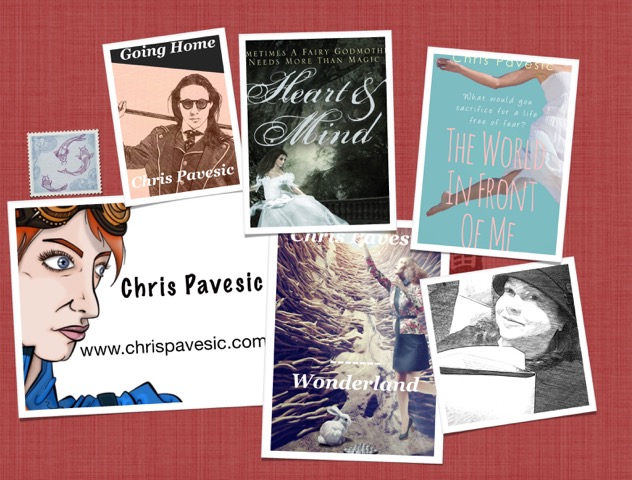
Guest Spot: Chris Pavesic

150 Years of ALICE by Chris Pavesic
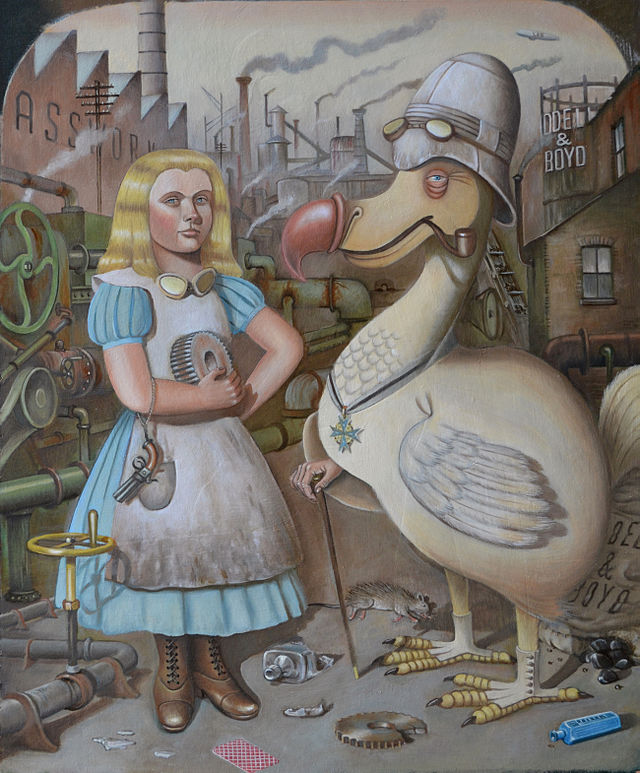
Liddell_&_Boyd_(Alice_in_the_looking_glass_works)_by_Karl_Beutel_2011
Liddell & Boyd (Alice in the looking glass works)_by Karl Beutel 2011
2015 marks the 150th Publication Anniversary of Alice’s Adventures in Wonderland. The story itself originates in 1862 when a girl named Alice Liddell and her two sisters rowed from Folly Bridge, Oxford, to Godstow with Lewis Carroll (Charles Dodgson) and his clerical friend, Robinson Duckworth. During this journey the girls were told the first version of the story to keep them entertained. Later the work was expanded and published in the version we now know and love.
Alice by Arthur Rackham 1907 Bridgeman Art Library
For me, the character of Alice has always been a remarkable one in childhood literature. She displays an inner strength in every situation, no matter how bizarre it may be (and in Wonderland the situations are never normal!). In an interview for ScreenCrave, Tim Burton explains his attraction to the character of Alice:
It’s a story about somebody using this kind of imagery and this kind of world to figure out problems and things in their own life, and what’s fantasy and reality and dreams and reality — how they are not separate things, that they’re one thing. It’s how we use those things to deal with our issues in life.
For example, when she falls through the earth, Alice does not react with terror. She thinks, she talks to herself, and she analyzes what is actually happening and what may happen in the future. Even though it is a bizarre situation, Alice deals with it in a logical way:
'I wonder if I shall fall right through the earth! How funny it'll seem to come out among the people that walk with their heads downward! The Antipathies, I think--' (she was rather glad there WAS no one listening, this time, as it didn't sound at all the right word) '--but I shall have to ask them what the name of the country is, you know. Please, Ma'am, is this New Zealand or Australia?' (and she tried to curtsey as she spoke--fancy curtseying as you're falling through the air! Do you think you could manage it?) 'And what an ignorant little girl she'll think me for asking! No, it'll never do to ask: perhaps I shall see it written up somewhere.'
Alice retains this quality throughout the novel and its sequel. She is curious, logical, and prepared to give as good as she gets in arguments. It doesn’t matter if Alice speaks to a caterpillar, a rabbit, a footman, a grinning cat, or a queen; she works to make sense and to analyze the situation.
Warehouse 13 Character of Alice Lidell
It is this type of boldness that attracted me to the character and the tone I tried to emulate in my story, Wonderland, which is based on parts of both Alice’s Adventures in Wonderland and Through the Looking Glass. Wonderland is set in a version of modern-day America, but still maintains the fearlessness, strength, and curiosity of the original character. One reviewer on Amazon.com writes:
Chris Pavesic’s Wonderland is set in the U.S. and references modern events. You will see all of the characters that you know and love from Carroll’s work, but they are in relatable forms for those of us “across the pond.” For example, the Tea Party takes place at a sorority house during pledge week. The dormouse is a pledge from a near-by fraternity who has overindulged in alcohol. One of his “brothers” has used a Sharpie marker to draw a mouse nose and whiskers on his face.
There have been many versions of Alice’s story through the years, including (but not limited to) the Disney animated version, the Resident Evil franchise, and the most recent version by Tim Burton. The character of Alice has appeared in many different television programs, including Warehouse 13. The images of Alice and her Wonderland compatriots appear almost everywhere on household goods, clothing, and technology.
Salvador Dali Alice Adventures in Wonderland
Artists have taken inspiration from the works to produce vivid and beautiful interpretations of the characters and the world. For example, the “Alice in Wonderland” works are considered to be one of the rarest and most sought after Salvador Dali suites. If you are interested in attending an event celebrating anniversary of this, please check out the following information at the Lewis Carroll website. The site lists 95 events in 11 countries. For a free copy of Alice’s Adventures in Wonderland, check out the Project Gutenberg edition online. Here is a brief introduction to Wonderland, the latest fantasy book by Chris Pavesic. Enjoy!
You may think you know her story. You don't. Throughout her life Alice has faced fear and isolation, but she has never given up hope. In the City by the Bay she has one last chance to find happiness; one last chance to find friendship; one last chance to find Wonderland. Click here to watch the YouTube video.
Read excerpts from all of the books written by Chris Pavesic on Amazon.
Chris Pavesic is a fantasy author who lives in the Midwestern United States and loves Kona coffee, steampunk, fairy tales, and all types of speculative fiction. Between writing projects, Chris can most often be found reading, gaming, gardening, working on an endless list of DIY household projects, or hanging out with friends. Learn more about Chris on her website. Stay connected on Facebook and Twitter.

Monday, April 18, 2016

Amateur

Let me stress I mean no insult when I use the term amateur. Every new writer is a nonprofessional. Some have an advantage of a journalistic or similar writing background but they, like everyone, learned their craft. Stories follow certain patterns and by studying these layouts one learns how to produce effective narratives; even if wishing to alter these standards to create something new, it is a good idea to recognise plot. Understand the ‘rules’ to break them.

I’m not going to catalog all the errors editors pick out in many draft manuscripts, but I will list one of which almost every wannabe is responsible. Even the successful author can be guilty although often the story-teller will catch this error in self-edits. If the writer doesn’t, a good editor will.

Many new writers begin their stories with long-winded paragraphs of exposition and description. Trained authors do this, but with good purpose. In those instances, the writers in question set the first chapter aside to use for their own information, extrapolating the necessary particulars into the narrative of the book, breaking up the details and ‘peppering’ the facts between the pages.

I once read an excellent piece of advice: Write your story and begin at the second chapter. Many writers, but particular ‘new’, will describe their characters from their height, hair, eye, and skin colour, to the checked pattern on their garments. This over description doesn’t end at the character but extends to the environment. These details may be important, but are best passed on as an ‘impression’. Study a book bearing this in mind. Examine how the author presents the main character. Is he or she described as being six feet tall, with brown eyes, and long brown hair swept over his or her shoulders? Of does the author describe this person through someone else’s impression of them? EG:

“His eyes were the same deep brown as the colour of his hair. Such eyes should have made her feel welcome. The way his full lips twitched suggested his gaze would be twinkling with amusement. Alas, when she risked straining her neck to look up to his face, his expression appeared taut, his lips tight, his gaze narrow.”

Fine, not the greatest paragraph. I haven’t put much effort into it, but the piece is more entertaining than a list of characteristics. As an alternative to saying he’s tall, she’s having to gaze up to such a degree she may strain her neck. The section indicates brown eyes and hair, but instead of stating the man is unhappy, the reader notes his expression may be hostile, is at least far from welcoming. Is he displeased about something, or with her? Right away, questions will likely keep people reading to discover the answers.

Likewise, it is never a good idea to include an information dump whether at the beginning or later in the book. On rare occasions, this is necessary. A rather tedious chapter exists in James Herbert’s The Fog. However, the data is necessary and is presented to the reader as a meeting. Do not begin by introducing a character, describing the room he or she occupies, and listing the background of how, when, where, and why the person came to be there, who their relatives are and what they are all thinking of having for lunch. Too much explanation slows narrative, can be boring, and also requires the reader to take in a great deal of information too fast. An editor will grow weary even faster. The manuscript will go straight to the slush pile.

Monday, April 11, 2016

Reads of 2015

If I thought my reading list the last couple of years was pitiful, 2015 was atrocious, but there were a few worth mentioning.

As You Wish by Cary Elwes is a must for any fan of The Princess Bride if only for the many reminiscences and stories behind the scenes of the cast. I finally read J.K.Rowling’s The Casual Vacancy with high hopes, yet I’m unsure how I feel about this book. I can appreciate the story, but the style was a little too much tell rather than show for me. I didn’t watch the television series because I have heard they insisted on a rather more upbeat ending. Not having the series to compare to the book, all I can say is I have no reservations about the end. It’s a consistently bleak book, but not all stories need to be promising.

I read all the Dexter volumes being a fan of the series and had no problem separating the stories from the show. As many things are similar as they are different. I’m making the rare choice here in preferring the show. The series did far more with the character.

 I cannot recap on this year’s reads without mentioning The Forgotten Son by Andy Frankham-Allen, the first of a series of Lethbridge-Stewart books ‘The Brigadier of Doctor Who fame’. A good opening setting for a well-loved character. I have reviewed the book and will repost that review sometime.

The Fault in Our Stars was a surprising read, far more poignant than I expected it to be while A New York Winter’s Tale left me wondering whether I’d read something incredible, audacious, or ultimately aimless and futile. I’ve such mixed feelings over the book that I really cannot decide and maybe in that the book served the writer’s intention. It’s neither a romance nor a steampunk fantasy though it put me in mind of one. The only recommendation I can make is to read the book and discard the movie that is a truly poor adaptation of a far-more-complex story.

I finally caught up on George R.R.Martin’s ‘Game of Thrones’ novels and like so many await more releases. Daughter of Ashes, by Esther Mitchell, is worth a mention for the world-building.

I didn’t know what to expect when I started reading, L.Joseph Shosty’s book Old Wine and Black Hearts. The title and the cover had me already, appealing to the Dark Fiction themes I enjoy. The contents were an odd but pleasant surprise because there’s no way to anticipate these stories. The book is divided into two sections. Old Wine contains an eclectic mix of the bizarre and disturbing. I thought the first story in the collection the weakest, but it proved to be a more gentle introduction into an unorthodox selection of unpredictable tales. A couple of favourites are Strings, which has a deeper layer and could mean different things to different people while They Burned Old Ben has a thread of dark humour that’s unsettling.

A Sincere Warning About The Entity in Your Home, by Jason Arnopp, is a short release of a semi-predictable horror story but told in a way that captured my interest. I’d never heard of the writer before, but his resume and style will have me looking up more of his work.

 So I ended the year on Gone Girl, by Gillian Flynn…another book that has left me with mixed feelings. I don’t like books told in the first person as much as third especially when more than one viewpoint is used and perhaps owing to this for the first third of the book it didn’t really work for me. The character presented in her early diary entries was so instantly unlikable I didn’t care what had happened to her, was merely curious. Perhaps the writer in me kept me reading because I had several theories. I don’t want to give away the story so it’s easier to keep to the impression I’m left with. This is a story about two complex but unlikable people who deserved each other, which doesn’t seem like the basis for a good novel; however, it’s clever and thought-provoking. Definitely, one that when read you want to discuss. Unfortunately, it also has one of the worst sentences I’ve come across in such an acclaimed book; had I written such a sentence and not edited it out, any one of my editors would have had me walking on hot coals. I keep thinking it has to be an error, but I have a sad feeling it’s not.

As always, hoping to do better with my reading this coming year.

Monday, April 04, 2016

Book List 2014

The second of my re-posts of book reads for the last couple of years, a time when I usually look back and reflect on some of the books I read during the last 12 months. 2014 I consider a poor year for reading, being only approximately 30 books in total, a drop from my reads of 2013, which numbered 45. I plan/sincerely hoped to do better in 2015 (you’ll see in my next post I did worse), although the reason for my low read count was owing to circumstances outside of my control. We’ve had a lot of disruptions, not least of which finally reaching the decision we’ve been toying with and deciding to move.

So, a handful of the books I read are:
Under the Dome, Stephen King (started in 2013)
Birmingham Noir, Joel Lane and Steven Bishop
A Feast for Crows, George R.R.Martin
A Discovery of Witches, Deborah Harkness
The Ocean at the End of the Lane, Neil Gaiman
Doctor Who Companions, Andy Frankham Allen
Lover Revealed, J.R.Ward
Deadlocked, Charlaine Harris
The Curious Case of the Clockwork Man, Mark Hodder
Dead Ever After, Charlaine Harris
Shifting Hearts, Dominique Eastwood
Flesh and Blood, Jonathan Maberry
Fire and Ash, Jonathan Maberry
A Peach of a Murder, Livia J Washburn
Teacher, Teacher, Jack Sheffield
The Bride Wore Black Leather, Simon R Green
The Exotic Marigold Hotel, Deborah Moggach
Murder and Marinara, Rosie Genova
The Dance of Dragons, Part 1, George R.R.Martin
Thud, Terry Pratchett
Changes, Jim Butcher
Horns, Joe Hill
The Night Before Christmas, Scarlett Bailey

I also read and caught up with a number of books in the Space 1889 series, and if I were to list them all in order of preference they would be toward the top of best-reads of 2014. As you can see, many of the other titles were of lighter content this year–a sure sign of stress and a lack of concentration on my part.

Still, I usually choose my read of the year…only this year that’s extremely difficult. I enjoyed Under the Dome, and was exceedingly disappointed in the television adaptation. My advice would be stick with the book.

I continue to like the works of George R.R.Martin because I’ve always had a soft spot for fantasy and one thing Game of Thrones does is present a realistic world completely with fallible characters and the messiness of war. It doesn’t just present high fantasy, swords & sorcery, and doesn’t shy away from the realities of subjects like torture.

A Discovery of Witches by Deborah Harkness was a pleasant find, but I didn’t realise it wasn’t entirely a standalone read and I’m not sure I can commit to another series just now so may not pick up the next book. The Ocean at the End of the Lane is typical Neil Gaiman and I may like his work to various degrees, but I’ve never come across a story of his I didn’t like.

Doctor Who Companions by Andy Frankham Allen was another surprising read. I’m not what one could call a ‘dedicated’ fan of Who in the sense I would want to know all there is to know, but this book is written with a warm, comfortable tone that made the information interesting, and I discovered many things I didn’t know or had forgotten. It belongs in every Whovians home.

Charlaine Harris’s last books in the Sookie Stackhouse universe came under some controversy, and I have to admit I had learned who Sookie finished up with before I read the last book. I stand by the author’s right to decide the outcome for her characters, and at one point in the series, I had seen this might be on the cards; however, I didn’t ‘feel’ it at the end. There was a time when I did earlier in the series, and therefore I had already made the possible link in my head and heart, but when it came down to it I personally found it to be a letdown because the emotions weren’t there for me. Still, it’s been a good series, with some unforgettable characters, and no author deserves the kind of abuse that Ms Harris faced over the outcome of these books. I’m at least happy the series reached a conclusion.

I’ve read Jonathan’s Maberry’s adult and YA books, and not only do they entertain, but it’s interesting for me as a writer to see how another author handles the degrees of violence and horror for different age groups. If you like zombies, check out his work.

Horns was a surprising read. I was intrigued when I saw a trailer for the film, and not having tried Joe Hill’s work before thought I’d take a look. I had read some disparaging remarks quoting the book as not being very good, but I enjoyed the overlapping layers contained in the story, the way the facts were revealed, and while the subject of the book–a man who grows horns–may strike many as bizarre and fantastical, it served the purpose of the story well. I did feel the writing could have been tweaked in a number of places, but that’s the thing with books–it’s all personal opinion.

One book that could undeniably do with an edit was unfortunately the one I ended the year on. I don’t usually read what many would describe as chick-lit, but while Scarlett Bailey’s characters aren’t the most likeable in The Night Before Christmas, it does make them somewhat real. Alas, the book has so many typos and missing words it made the task of connecting with them even more difficult. I picked it up as a light read as we were on the move all Christmas and new year week, but feel this is one book that will end up going to the charity shop.

So from my least favourite book of the year to my favourite overall…the trouble is this year I don’t have one. Under the Dome, The Ocean at the End of the Lane, The Curious Case of the Clockwork Man, The Exotic Marigold Hotel, Thud, Changes, Horns…these are all worth a look. If absolutely pushed…I guess I’d have to choose Thud. Nothing beats the genius of Terry Pratchett.